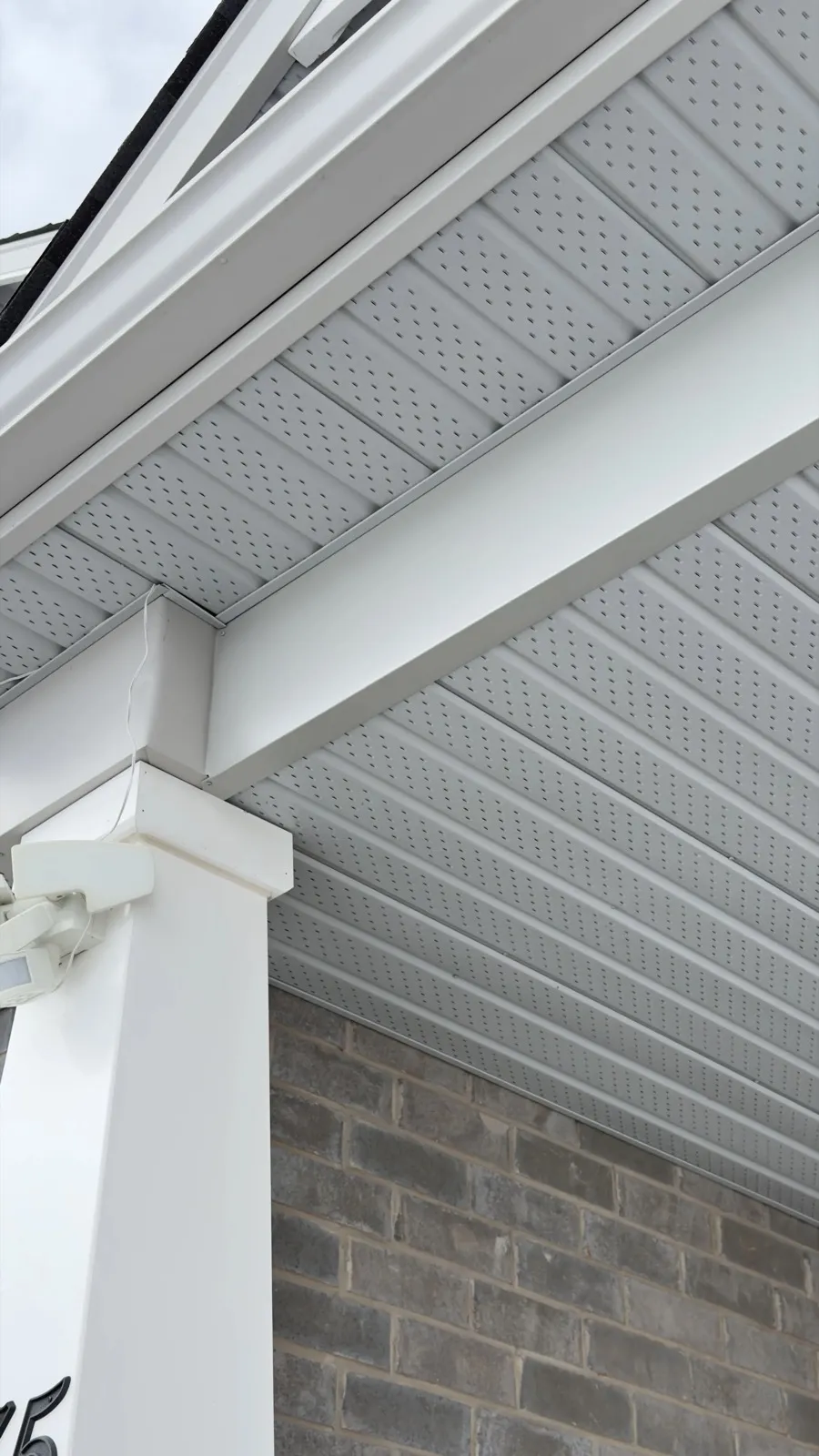
Aluminum capping is only as good as the person bending it, so here is how to hire a KW contractor whose brake work keeps water out of your windows and doors.
Capping in Waterloo Region: What Makes Our Climate Different
Capping wraps exposed exterior wood, such as window and door trim, brickmould and sills, in custom-bent aluminum so it never needs painting and, more importantly, sheds water away from the openings in your wall. In Waterloo Region that water management is critical: our 80 to 120 freeze-thaw cycles a year drive moisture into any gap, and once it freezes behind poorly formed capping it pries seams open and rots the wood it was meant to protect. In 2026, quality window and door capping runs roughly $8 to $18 per linear foot installed, or about $60 to $150 per standard window, depending on trim complexity and colour matching.
Capping is where craftsmanship shows most, and KW's housing stock demands range. The ornate wood trim on century homes in Galt, Preston and Old University Guelph needs patient, custom brake work to wrap cleanly, while the many windows on newer two-storeys in Doon and Beechwood reward speed without sacrificing tight corners. Mid-century homes in Stanley Park and Forest Heights often have wide wood casings that look transformed once capped in colour-matched aluminum. D&D Exterior Finishing brake-forms capping on-site across Kitchener, Waterloo, Cambridge and Guelph, matching the metal to each home's windows, soffit and trim rather than settling for a near-enough colour.
The detail that separates capping that protects from capping that leaks is the head flashing above windows and doors: it must be formed and layered so water runs out and over the trim below, never behind it. Equally important is caulking discipline, sealing the sides and top while leaving the bottom edge open so any trapped moisture can weep out instead of pooling. Capping is best applied in mild, dry weather so sealant cures properly, spring through fall. No permit is required for capping in the region, but it is smart to address any soft or rotted trim before wrapping it.
Credentials and Brake Skill to Verify
Handle the business basics before you judge the craft. Confirm the capping contractor carries a current WSIB clearance certificate, at least $2 million general liability insurance, and a registered Ontario business number, and ask to actually see the paperwork. Much capping, especially upper-floor windows and door heads, is done from ladders and scaffolding, so working-at-heights training under O. Reg 297/13 is a must for the crew. Because capping ties into siding, soffit and trim, favour a contractor who does exterior finishing as their core trade rather than a handyman adding it to a list, since the water-management details are easy to get wrong. Verified credentials also give you recourse if a ladder cracks a window or a worker is injured at your home.
Capping is a craft, and the tell is how a contractor talks about the brake. Quality capping is bent to measure on a bending brake on-site, with crisp corners, hemmed, folded edges for rigidity, and returns that hug the trim, not loose, wavy metal held on with a rope of caulk. Ask how they form head flashing over windows and doors; the right answer describes a top piece that laps over the sides so water sheds outward, never behind. They should colour-match the aluminum coil to your windows, soffit and existing trim, and describe a caulking approach that seals the top and sides but leaves the bottom open to weep. A contractor who treats capping as precision sheet-metal work will protect your openings; one who relies on caulk to hide sloppy bends will not.
Questions to Ask Before Hiring for Capping
Get straight to the water details. Ask 'How do you flash the tops of my windows and doors?' where you want to hear that head flashing laps over the side pieces so water runs out and away, not that caulk seals it up. Ask 'Do you bend the capping on-site with a brake, and do you hem the edges?' since on-site brake work and hemmed edges are the signs of a real capping crew. Follow with 'How will you match the colour to my windows and soffit?' because a slightly-off colour is obvious once it is up. Also ask 'What is your caulking approach, and do you leave weep gaps at the bottom?' A contractor who seals everything shut, bottom included, will trap water against your trim.
Then confirm condition and accountability. Ask 'Will you check the trim for rot before capping, and what happens if you find soft wood?' because wrapping rot in aluminum only hides a growing problem, so the answer should include repairing or replacing bad wood first. Ask 'What gauge of aluminum coil do you use?' since heavier coil holds its shape and resists oil-canning better through our temperature swings. Confirm 'Is the crew your own employees, covered by the WSIB and insurance you showed me?' and request a written scope listing the number of windows and doors, linear footage, colour, flashing details and cleanup. A contractor who documents the flashing and colour on paper, and separates any needed trim repair, is one who intends to do it properly.
What Drives Capping Cost and Where Cheap Quotes Cut
Capping is priced by the window and door or by the linear foot, and the cost is driven by trim complexity, coil gauge, colour matching and access. Simple square windows on a Beechwood bungalow cap quickly; ornate brickmould and arched trim on a Galt century home take far more brake work and time. Heavier-gauge aluminum coil and a custom colour match to your windows cost a little more but look and last noticeably better than stock white. Upper-floor and door-head work adds staging and labour. In 2026, expect roughly $8 to $18 per linear foot, or about $60 to $150 per standard window. A quote that just says cap all windows without counting openings, naming a colour or mentioning flashing is hiding its shortcuts.
When a capping quote is surprisingly cheap, the savings are usually in the details that keep water out. The most common corner-cut is weak or skipped head flashing, relying on a bead of caulk over the top instead of properly lapped metal, which fails within a few freeze-thaw seasons. Others use thin coil that oil-cans, rush the brake work so corners are loose and wavy, settle for a near-match colour that clashes with your windows, or caulk the bottom edge shut so trapped moisture rots the trim from behind. Cheapest of all is capping straight over rotten wood. None of this is visible from the sidewalk on install day, which is exactly why a detailed quote naming flashing, colour and gauge is worth more than the lowest number.
Reviews, References and Warranties for Capping
Capping either keeps water out for decades or leaks quietly behind the trim, so read reviews for the right signals: comments about crisp, tight metalwork, colour that matched perfectly, and no leaks or drafts around windows afterward. Reviews mentioning a contractor who caught rot before wrapping, or whose corners still look sharp years later, point to genuine skill. Ask for local references from capping jobs a couple of winters old and, if you can, drive by to see how the corners and colour have held up. A proud capping contractor will happily show completed windows in Stanley Park, Doon or Hespeler. Be cautious of a company with only fresh install-day photos and no older work to point to, since brake skill and flashing quality only prove themselves after a few KW winters.
Insist on a written workmanship warranty and make sure it covers water intrusion and loose or lifting capping, not just the aluminum's finish, which is covered separately by the coil manufacturer. In our market a fair capping workmanship warranty runs two to five years; ask whether it specifically includes leaks around window and door heads, since that is where failures show. Confirm it transfers if you sell. When the crew finishes, inspect closely: corners should be tight and square, edges hemmed with no sharp exposed metal, colour consistent with your windows and soffit, the top and sides sealed, and the bottom left to weep. D&D Exterior Finishing carries full WSIB clearance and $2M liability, brake-forms and flashes each opening to shed water, and backs its capping with a written warranty.
Frequently Asked Questions
- What is aluminum capping and why do it?
- Capping is custom-bent aluminum wrapped around exterior wood, such as window and door trim, brickmould and sills, so it never needs painting and sheds water away from the opening. Done well, it protects the wood underneath for decades and gives the exterior a clean, finished look that matches your soffit and gutters.
- Can you cap over trim that is already rotting?
- You should not. Wrapping aluminum over soft or rotted wood traps moisture and lets the decay spread unseen, which eventually shows as leaks or lifting metal. A proper contractor inspects the trim, repairs or replaces any bad wood, and only then caps it so the capping actually protects rather than hides a problem.
- Is D&D Exterior Finishing insured and WSIB-covered?
- Yes. D&D Exterior Finishing carries full WSIB clearance and $2M liability insurance, and we provide both certificates before any work starts. You are fully protected from liability in the event of an on-site injury or property damage during your capping project.
Key Takeaways
- Capping is precision sheet-metal work, so judge a contractor by their on-site brake work and head-flashing method.
- Verify WSIB, $2M liability and working-at-heights training before hiring.
- Make sure quotes name colour match, coil gauge and flashing; cheap bids skip proper head flashing.
- Never cap over rot, and get a two-to-five-year written warranty that covers water intrusion.
- D&D Exterior Finishing serves Kitchener, Waterloo, Cambridge, Guelph and surrounding areas
- Get a free no-obligation quote — call or book online anytime
Sources & References
- Ontario Building Code — Relevant Standards & Guidelines
- D&D Exterior Finishing field experience across Waterloo Region
Book your free quote online
Pick a date and time below — takes about 60 seconds, and we’ll confirm by email.