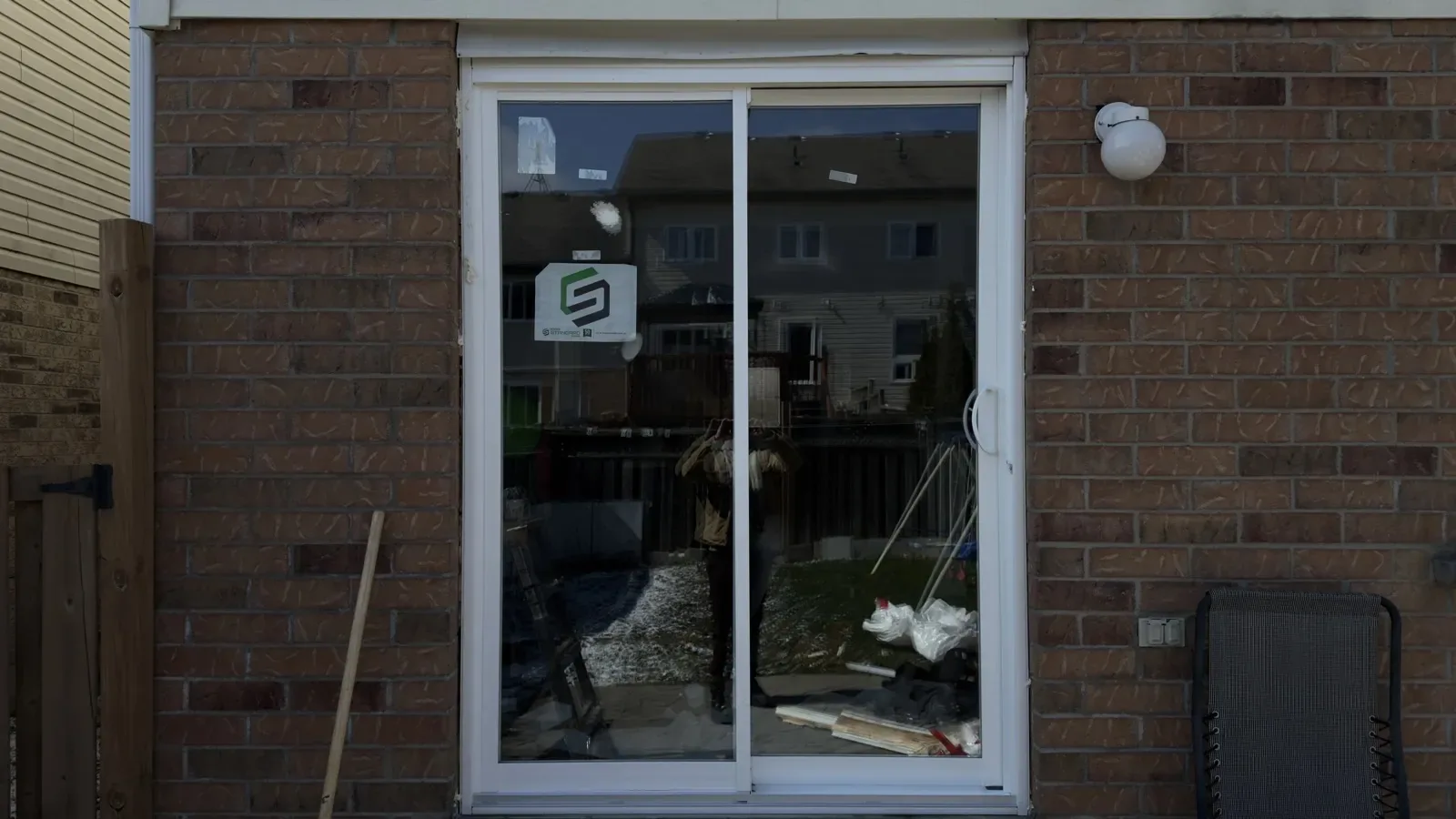
Check alignment before removing parts
With the door closed and latched, inspect the top, sides and bottom for torn or flattened seals. Look at the gap around the slab and note rubbing, a loose hinge or a lock that needs force. New weatherstripping cannot reliably compensate for a door that sits out of position.
A thin sheet of paper can help compare contact at several points: close the door on the paper and feel for resistance as it is withdrawn. Treat this as a local contact check, not a test of the entire entry’s airtightness or rain resistance. Photograph the existing strip and its corners before removal.
Match the seal and its mounting method
Find the door manufacturer or keep an identifiable sample. Match the profile, mounting edge and intended compression. Some seals push into a kerf or groove; others use a channel, adhesive or mechanical attachment. A common groove-mounted bulb is not simply a strip to nail or staple in place.
Follow the door maker’s replacement instructions. Clean the receiving groove or bonding surface without damaging the finish, seat the new strip fully and fit the ends as directed. Avoid stretching it to cover a gap, as that can leave the corners short later. Do not paint over flexible seals.
Check the bottom seal and final operation
The door sweep, sill cap and corner seals are separate components on many systems. Inspect them for damage and identify compatible replacements. Some thresholds are adjustable; others are not. Use the specified adjustment process rather than raising the sill until the door drags.
Open, close, latch and lock the door repeatedly after fitting. It should make seal contact while operating normally. If a corner still leaks air, revisit alignment and the corner detail. Water entering below the threshold or behind trim may require investigation of the sill or flashing instead of another weatherstrip.
Technical references
- Therma-Tru: Replacing door weatherstripping — Manufacturer example of a groove-mounted replacement weatherstrip.
- Therma-Tru: Door care and maintenance — Door-system maintenance and replaceable sill components.
- NRCan: Upgrading windows and exterior doors — Door weatherstripping and fixed-perimeter sealing are different tasks.

Include a preferred date and time
Discuss your exterior project
Select the exterior work and note the current material and repair or replacement needs.
Prefer to send the details first? Request a quote or call (519) 501-5003.