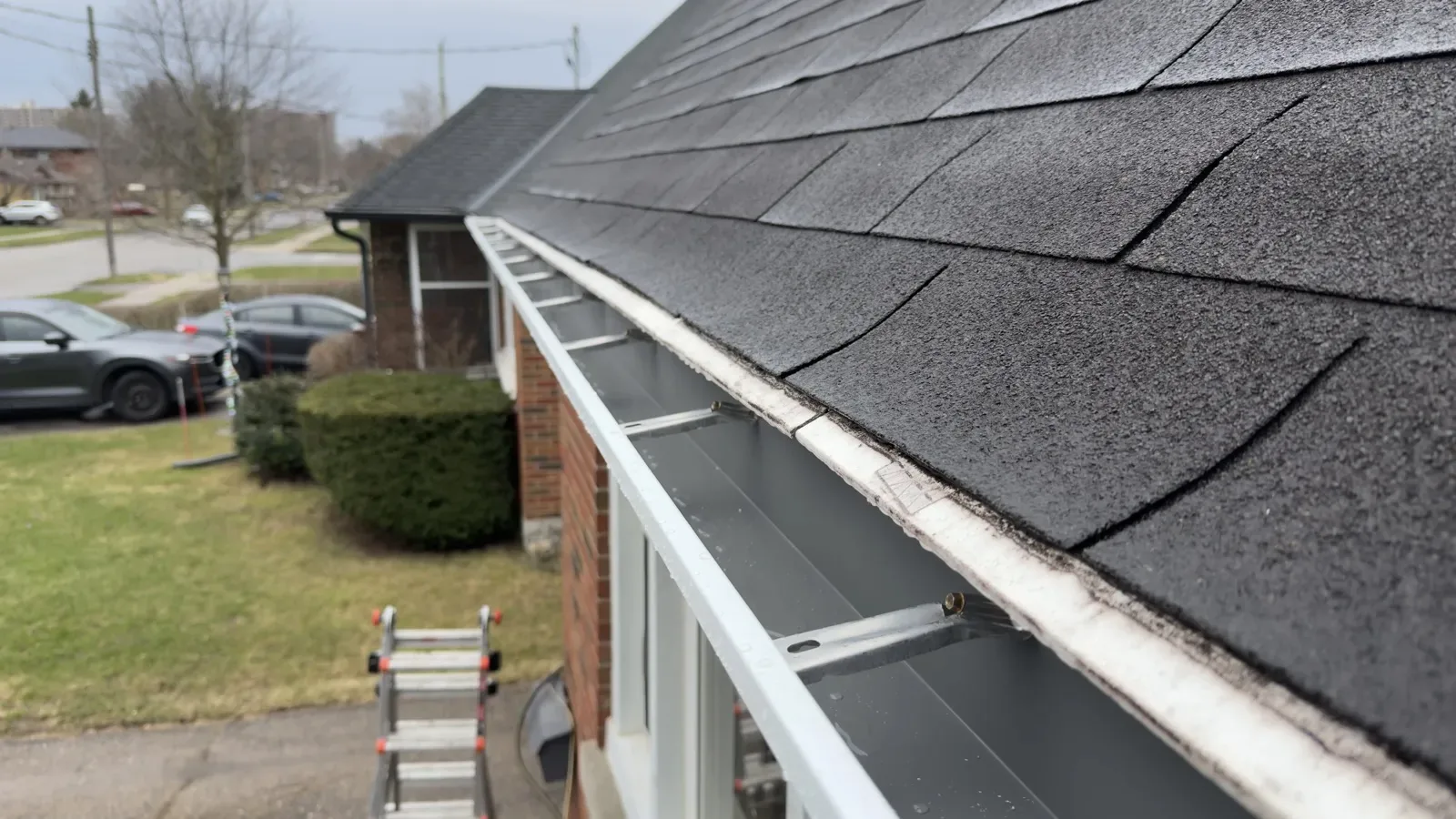
Aluminum and steel: compare the actual specification
Prefinished aluminum is available in continuous formed runs and coordinated colours. It avoids the red rust associated with steel, but can dent or distort and still has joints and outlets needing care. Specify thickness in units rather than calling a decimal-inch measurement a gauge.
For steel, ask which protective coating or finish is supplied, how cut edges are handled and which accessories are compatible. Do not assume that every steel product is stronger in service or has the same corrosion resistance. Profile, supports and exposure affect the installed result.
Copper: appearance and compatibility matter
Copper changes colour as it weathers and develops a patina. Compare samples or aged installations if that changing appearance is part of the appeal. Do not buy solely on a promised century-long lifespan or a fixed cost multiple over aluminum.
The Copper Development Association’s gutter specifications address compatible accessories and separation from dissimilar materials. Ask how roof runoff, adjacent metal, straps, joints and masonry contact will be detailed. A partial replacement needs a compatibility review as much as a full copper system.
Vinyl and the whole-system comparison
Vinyl systems use formed sections and connectors. Review the specific joint and support instructions and how replacement pieces will be obtained. Do not infer that every vinyl system is a short-lived product from its material alone.
For every option, compare the same runs, outlets, downspouts and discharge work. Continuous runs can reduce intermediate joints; sectional construction may allow individual pieces to be replaced. Neither choice removes the need for correct drainage fall, secure supports and maintenance.
Technical references
- Gentek aluminum soffit, fascia and rainware installation guide — Aluminum drainage is an assembly with specified joints and supports.
- Copper Development Association: Gutters and downspouts — Copper gutter accessories and dissimilar-material contact need detailing.
- Copper Development Association: Architectural finishes — Copper finish changes with weathering.

Include a preferred date and time
Discuss your exterior project
Select the exterior work and note the current material and repair or replacement needs.
Prefer to send the details first? Request a quote or call (519) 501-5003.