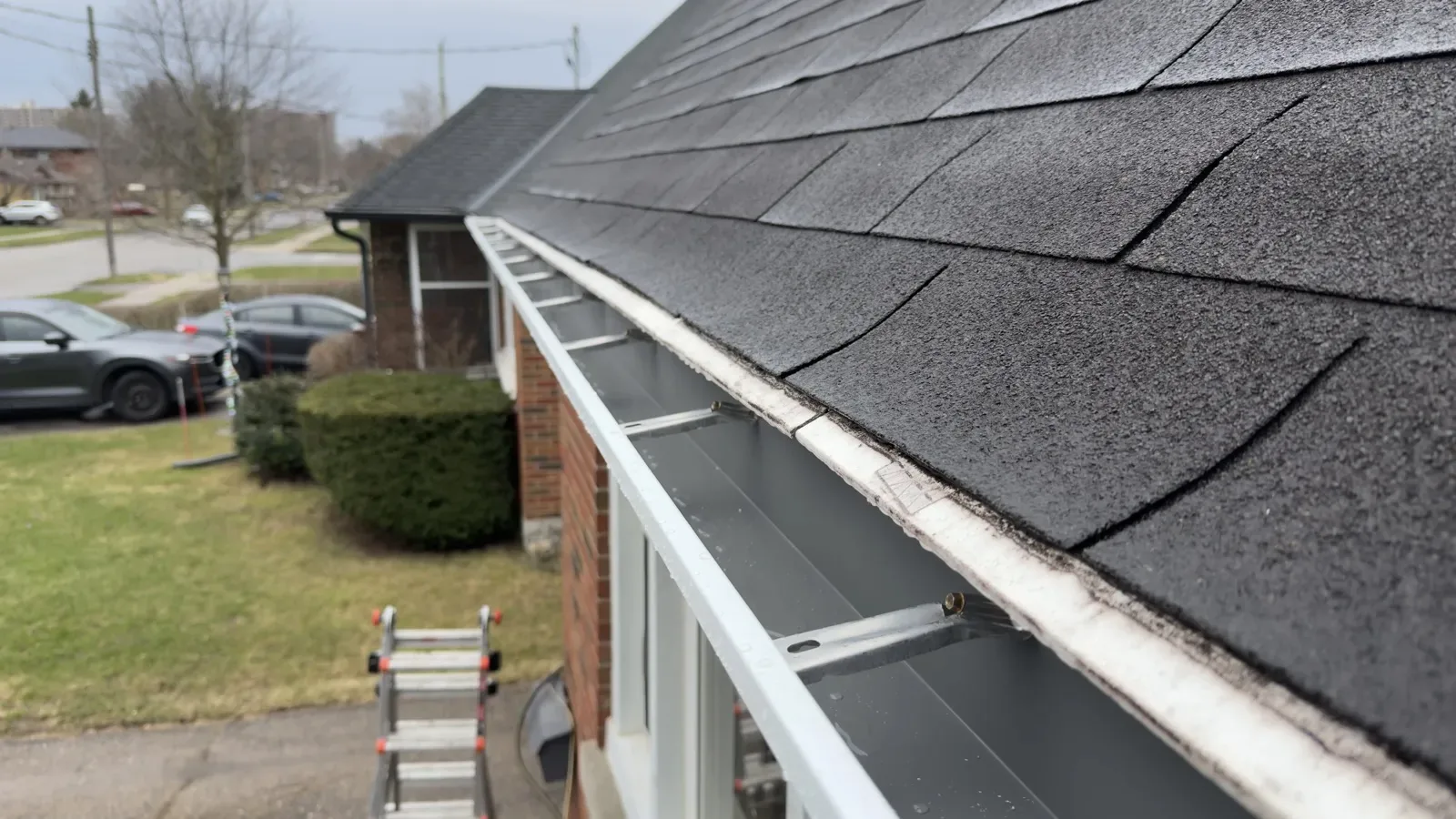
Understand the intended drainage fall
Ask where each run starts high and where it drains. Long runs may be divided toward different outlets. The fall should be set using an appropriate measurement method rather than judged solely from the gutter’s front edge.
Gentek’s standard five-inch gutter guide uses a minimum fall of 6 mm over 3 m toward the nearest outlet. That is a product-specific reference; use the relevant instructions and design for the installed system.
Distinguish pooling, blockage and overshooting
Persistent pooling after rain can point to debris, a low spot or an outlet higher than the gutter bottom. Ask for the run and outlet to be cleared and checked before assuming that every section must be rehung.
Water spilling at a valley can also involve concentrated runoff or water passing over the gutter from the roof. Note whether it fills and spills or misses the trough. That distinction helps avoid paying for a slope adjustment that leaves the actual problem untouched.
Repair supports and verify the result
Loose hangers or deteriorated backing can change the fall after installation. Repositioning the gutter without correcting that attachment can allow the low spot to return. Have the backing, hangers and any damaged section assessed together.
After the repair, verify the intended route to the outlet and check remaining joints. An extra outlet may be appropriate where the layout warrants it, but a long run does not automatically lose slope over time. Retain the repair description and monitor the affected area during later rainfall.
Technical references
- Gentek aluminum soffit, fascia and rainware installation guide — Standard five-inch guide documents minimum fall and support arrangements.

Include a preferred date and time
Discuss your exterior project
Select the exterior work and note the current material and repair or replacement needs.
Prefer to send the details first? Request a quote or call (519) 501-5003.