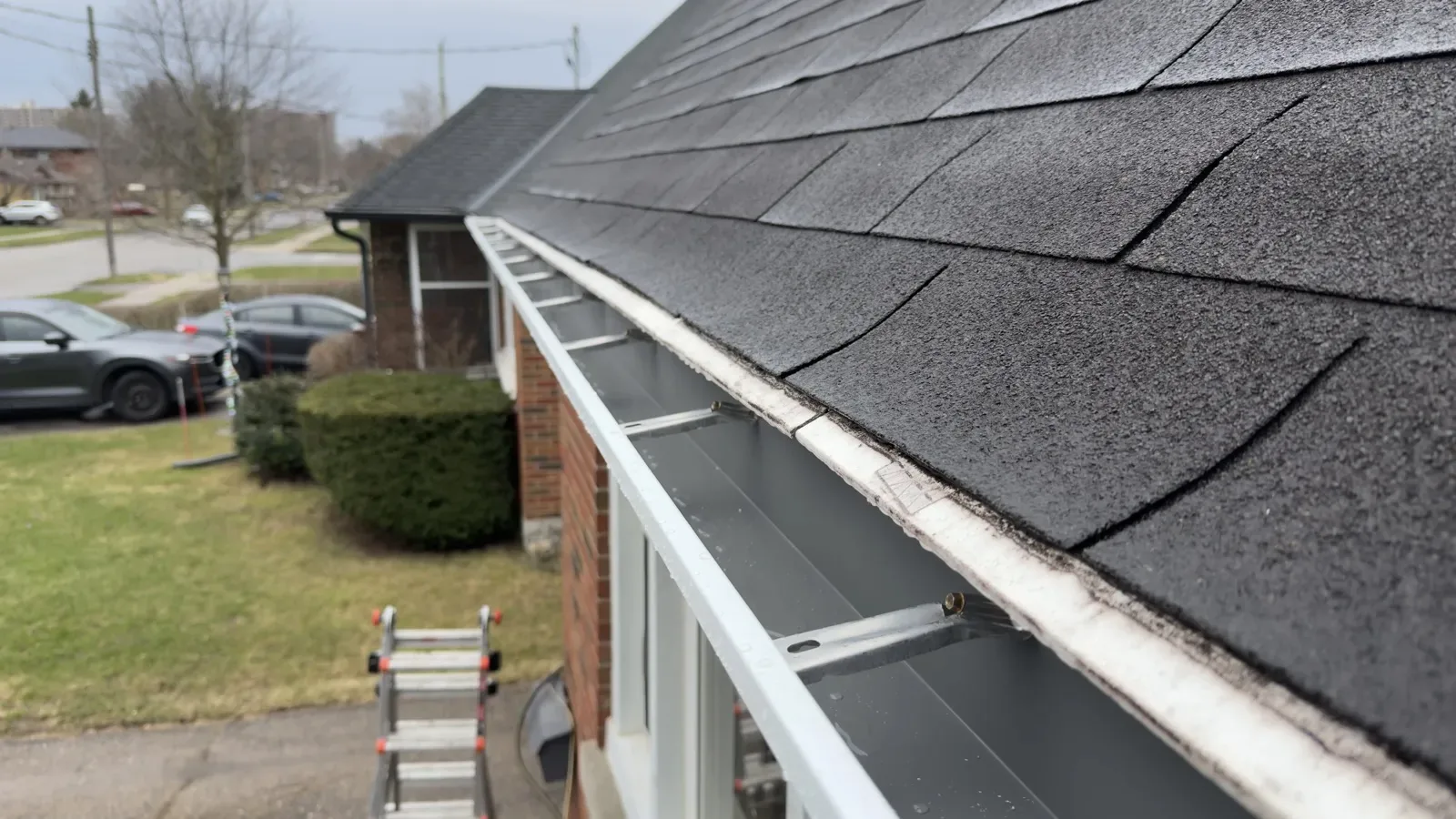
Eavestrough in Waterloo Region: Climate-Specific Requirements
Eavestrough systems in Kitchener-Waterloo carry unusually heavy seasonal loads β roughly 3,000 mm of annual precipitation equivalent (rain + snowmelt) plus leaf drop from the mature tree canopy in Westmount, Forest Heights, Victoria Park, and Old University Guelph. 5-inch K-style seamless eavestrough is the regional standard for most residential applications; 6-inch is spec'd for large roof areas (3,000+ sq ft drainage) or steep-pitched Victorians in Cambridge's Galt core. D&D Exterior Finishing bends all eavestrough on-site using a truck-mounted brake for true seamless runs up to 60 ft β no joints means no leak points over the 25-year lifespan.
Typical 2026 pricing across the tri-city market: $7β$11 per linear foot installed for 5-inch seamless aluminum, $9β$14 for 6-inch, plus $50β$90 per downspout. A typical 1,800 sq ft Waterloo Region home with 180 linear feet of eavestrough plus 4 downspouts runs $1,600β$2,400 total. Leaf-guard add-ons (Alu-Rex T-Rex or Gutterglove) add $8β$14 per linear foot but reduce cleaning calls to zero.
Guelph's higher elevation and heavier snow loads mean we upgrade to heavier-gauge .032 aluminum or .040 over the .027 industry-standard in snow-belt neighbourhoods. Cambridge and Kitchener lowlands can run standard gauge.
Why Spring Inspection Matters for Eavestrough & Gutter Systems in Ontario
Ontario winters are among the most demanding weather conditions in the world for building exterior systems. Kitchener-Waterloo experiences 40 to 60 freeze-thaw cycles annually, combined with heavy snowfall, ice storms, and spring ice damming conditions that stress every component of the building envelope. The spring inspection window β ideally late March through April β allows homeowners to identify winter-caused damage before the April through June rainy season drives water through compromised areas. Issues found in spring inspection and addressed promptly typically require minor repairs; the same issues left until fall or next spring often require much more extensive and expensive remediation.
Your Spring Eavestrough & Gutter Systems Inspection Checklist
Conduct your spring eavestrough & gutter systems inspection systematically, ideally on a clear day that allows for good visibility. Start with a perimeter walk of your home at ground level, noting any visible signs of movement, separation, damage, or deterioration. Use binoculars to examine upper-storey areas without requiring ladder access. Check specifically for signs of ice dam damage at eave edges and valleys, wind damage to projecting or exposed elements, moisture staining that indicates water infiltration, and any areas where winter settling or frost heaving may have caused movement. Note your findings with photographs and dates for contractor reference.
Interpreting What You Find: Priorities and Next Steps
When evaluating your inspection findings, distinguish between issues requiring urgent attention and those that can be scheduled for less immediate repair. Any finding that creates a direct pathway for water infiltration into the building structure is urgent and should be addressed within days, not weeks. Cosmetic issues, minor surface wear, and end-of-life-but-still-functional conditions can be scheduled for repair during the current season without immediate urgency. Contact D&D Exterior Finishing for a free professional assessment if you find issues you're unsure how to prioritize β our assessment adds context that helps you make informed decisions.
Spring Maintenance Tasks for Eavestrough & Gutter Systems Longevity
Beyond addressing identified deficiencies, spring is the right time for preventive maintenance tasks that extend the life of your eavestrough & gutter systems through the next Ontario winter. These tasks include cleaning and clearing any debris that has accumulated over winter, checking and refreshing exterior sealants and caulking at joints, ensuring drainage away from the foundation is functioning correctly, and addressing any vegetation that has grown in contact with exterior materials. Small annual maintenance investments in spring extend the functional life of your eavestrough & gutter systems significantly and prevent the accumulation of deferred maintenance that drives major replacement costs.
Frequently Asked Questions
- When is the ideal time for spring eavestrough & gutter systems inspection in Ontario?
- Late March through April is ideal β after the main freeze-thaw season but before spring rains peak. This gives maximum visibility of winter damage and time to schedule repairs.
- Can I do my spring eavestrough & gutter systems inspection myself?
- A ground-level visual inspection is safe and useful. Ladder access for close examination should involve proper safety precautions, and for two-storey or complex homes, a professional assessment is safer and more thorough.
- Does D&D Exterior Finishing offer spring inspection services in Waterloo Region?
- Yes, contact D&D Exterior Finishing for a spring exterior assessment. We serve all of Waterloo Region and can provide prioritized repair recommendations at no charge.
Key Takeaways
- Ontario winters are among the most demanding weather conditions in the world for building exterior systems.
- Conduct your spring eavestrough & gutter systems inspection systematically, ideally on a clear day that allows for g...
- When evaluating your inspection findings, distinguish between issues requiring urgent attention and those that can be sc...
- Beyond addressing identified deficiencies, spring is the right time for preventive maintenance tasks that extend the lif...
- D&D Exterior Finishing serves Kitchener, Waterloo, Cambridge, Guelph and surrounding areas
- Get a free no-obligation quote — call or book online anytime
Sources & References
- Ontario Building Code — Relevant Standards & Guidelines
- D&D Exterior Finishing field experience across Waterloo Region