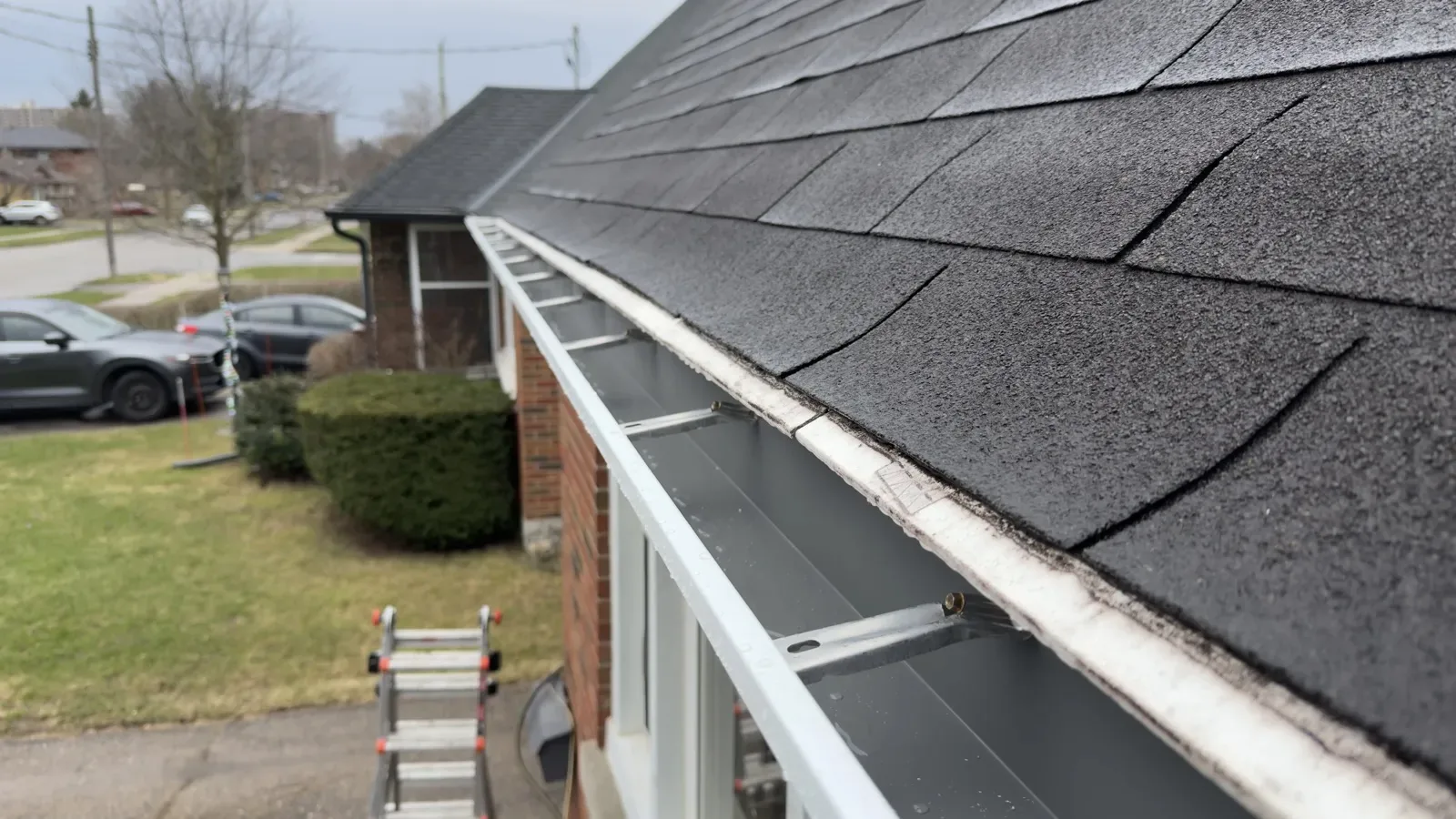
Begin with a ground-level survey
Walk each elevation and photograph the gutter line, corners, downspouts and discharge ends. Use binoculars for high areas. Identify hanging pieces or falling-ice hazards before approaching the area below.
Compare this spring’s photographs with earlier ones if available. A new sag or separated attachment deserves a different response from unchanged cosmetic staining. Do not disturb icy roof edges to get a closer view.
Check the system in a repeatable order
- Look for displaced runs, open joints and damaged fascia behind the gutter.
- Arrange clearing of leaves, twigs and seed debris from troughs and guard surfaces.
- Check outlets, elbows and accessible connections for obstruction.
- Confirm extensions remain connected and terminate on a suitable drainage route.
- Observe rainfall for leaking seams, overflow and water returning toward the house.
Record which items were observed and which could not be accessed. A ground-level check is useful but does not verify hidden backing or the inside of every downspout.
Prioritize the findings
Keep people clear of loose overhead components and seek prompt help for active water entry or unsafe discharge. Persistent overflow or a separating gutter needs assessment of the system and supporting material.
Cosmetic wear can usually be evaluated separately from active leaks. Ask whether the proposed action is cleaning, a joint repair, support repair or a layout change, and what evidence supports replacement if it is recommended.
Complete maintenance without hiding defects
Use the specified cleaning and sealant methods for the product. Do not smear sealant over every visible joint or cover intentional access and drainage openings. A recurring leak may need the connection repaired rather than another surface bead.
Check rain-barrel connections and overflow before returning them to service, following the product instructions. Monitor spring seed drop after the initial clearing; a clean gutter in early spring can become obstructed later.
Questions after the inspection
- Should I inspect on a fixed date?
- Choose safe conditions after winter and repeat checks as debris and rainfall change.
- Does a clear gutter rule out basement drainage problems?
- No. Downspouts, discharge, grading and other water routes also matter.
- What should I give a contractor?
- Dated photos, affected locations, rain-related observations and any previous repair records.
Technical references
- Government of Canada: Eavestroughs and downspouts — Spring inspection, debris clearing and rain-barrel care.
- City of Waterloo: Property standards and drainage — Maintain appropriate discharge and drainage routes.

Include a preferred date and time
Discuss your exterior project
Select the exterior work and note the current material and repair or replacement needs.
Prefer to send the details first? Request a quote or call (519) 501-5003.