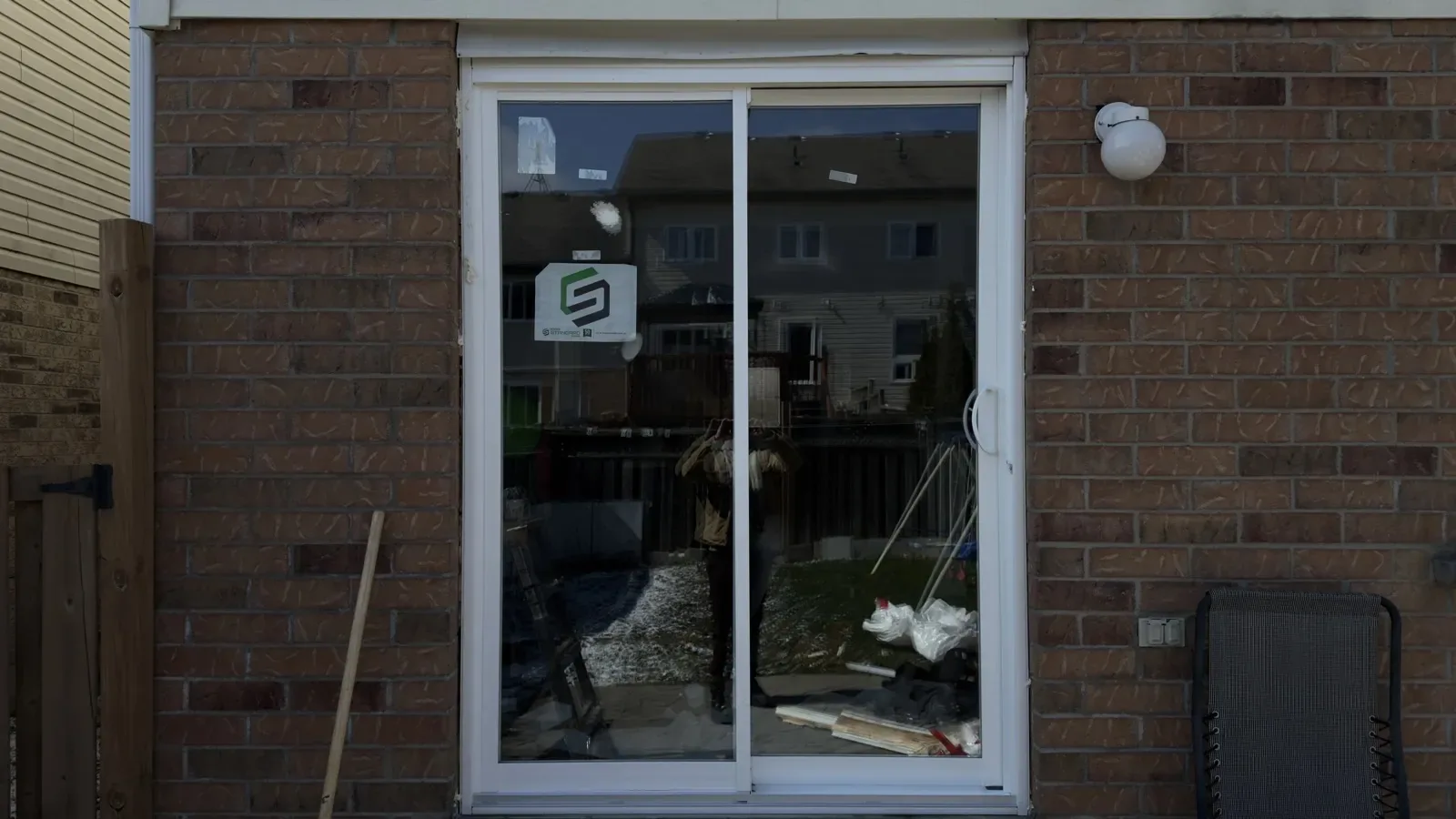
Inspect with the door closed and latched
Feel for drafts around the perimeter with your hand, look for damaged seals and compare the gaps at the top and sides. A paper contact check can help locate a weak spot. Use these observations rather than an open flame near finishes, curtains or seals.
Check whether the door has to be lifted or pushed hard to latch. Uneven contact can reflect hinge, strike or frame alignment. A thicker seal may make the latch problem worse without addressing the cause. Note whether leakage occurs in wind, rain or only in very cold conditions.
Separate the moving seals from the fixed frame
The head and jamb weatherstripping, bottom sweep and threshold need compatible profiles and contact. Identify the door system before replacing parts. Automatic bottoms, brushes, compression bulbs and magnetic seals are not interchangeable solutions for every entry.
Air can also bypass these parts through the fixed frame-to-wall joint. That connection may need a continuous, compatible air seal beneath the trim. Insulation alone is not proof of airtightness. Follow the installation requirements for suitable sealants or foam, keeping the frame straight and drainage features clear.
Investigate rain entry beyond the surface bead
Look for damaged sill components, failed corner details, staining around the jamb and water arriving from above. Do not assume water visible at the bottom originated there. Photograph the pattern during rain if it can be done safely, then have the sill pan, flashing and adjacent wall connection assessed as needed.
Replacing a worn sweep can help when that is the failed part, but caulking across a drainage outlet can trap water. Resolve the water path and any damaged support material before finishing over it. After repair, verify ordinary door operation and monitor the original leak location under comparable conditions.
Technical references
- NRCan: Upgrading windows and exterior doors — Weatherstripping and fixed-joint air sealing.
- Therma-Tru: Replacing door weatherstripping — Match replacement weatherstripping to the actual system.
- Therma-Tru: Door installation — Sill, flashing and perimeter installation requirements.

Include a preferred date and time
Discuss your exterior project
Select the exterior work and note the current material and repair or replacement needs.
Prefer to send the details first? Request a quote or call (519) 501-5003.