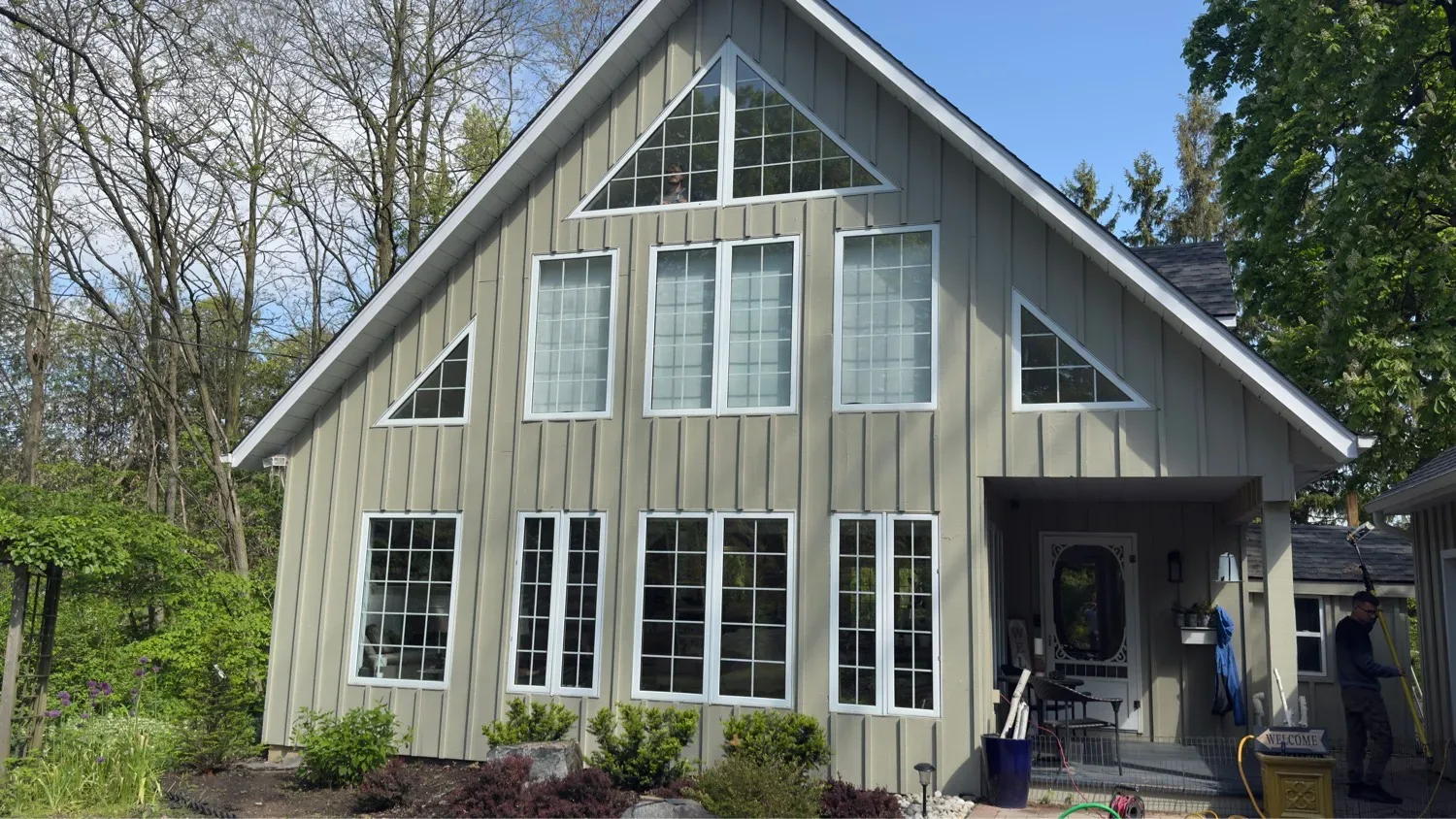
Assess and protect the work area
- Identify the surface: record wood, metal, vinyl, fibre cement, stucco or another cladding and note the existing finish.
- Assess old coatings: before sanding or stripping older paint, resolve whether lead is present and use an appropriate removal plan.
- Protect surroundings: agree how windows, plants, paving, fixtures and access routes will be protected and how debris will be contained.
Identify leaks, loose boards, soft trim and failed sealant separately from cosmetic marks. A coating specification should not hide repairs that are outside the price. Photograph problem areas so the completed work can be compared with the agreed scope.
Clean and establish a sound, dry surface
- Clean compatibly: use the cladding maker’s method; high-pressure washing is not suitable for every product.
- Remove unsound coating: use the approved preparation method after the old-paint assessment, leaving a stable surface for the new system.
- Check drying: verify that the substrate meets the chosen coating’s moisture and condition limits; a fixed wait after washing is not proof.
Where ordinary abrasion is appropriate, feather repair edges and remove dust. If chalk or contamination remains, address it with a compatible preparation and coating plan instead of assuming another topcoat will bind it permanently.
Confirm the coating and joint details
- Prime as specified: identify bare areas, stains and substrate-specific requirements.
- Renew intended sealant joints: follow the sealant/coating sequence and leave drainage or ventilation openings clear.
- Check conditions: allow the required application, recoat and early weather-protection window.
Review the prepared surfaces before painting conceals them. Keep the primer, topcoat, colour and sheen in the job record, with any exclusions or remaining repairs. This turns “standard prep” into something the homeowner and contractor can actually inspect.
Technical references
- Health Canada: Lead-based paint — Assess older lead-containing paint before disturbing it.
- Benjamin Moore: Exterior painting preparation — Surface condition and drying before coating.
- James Hardie: Cleaning siding — Example of cladding that should not be pressure washed.
- Sika Canada: Construction sealant instructions — Joint preparation and compatible coating sequence.

Include a preferred date and time
Discuss your exterior project
Select the exterior work and note the current material and repair or replacement needs.
Prefer to send the details first? Request a quote or call (519) 501-5003.