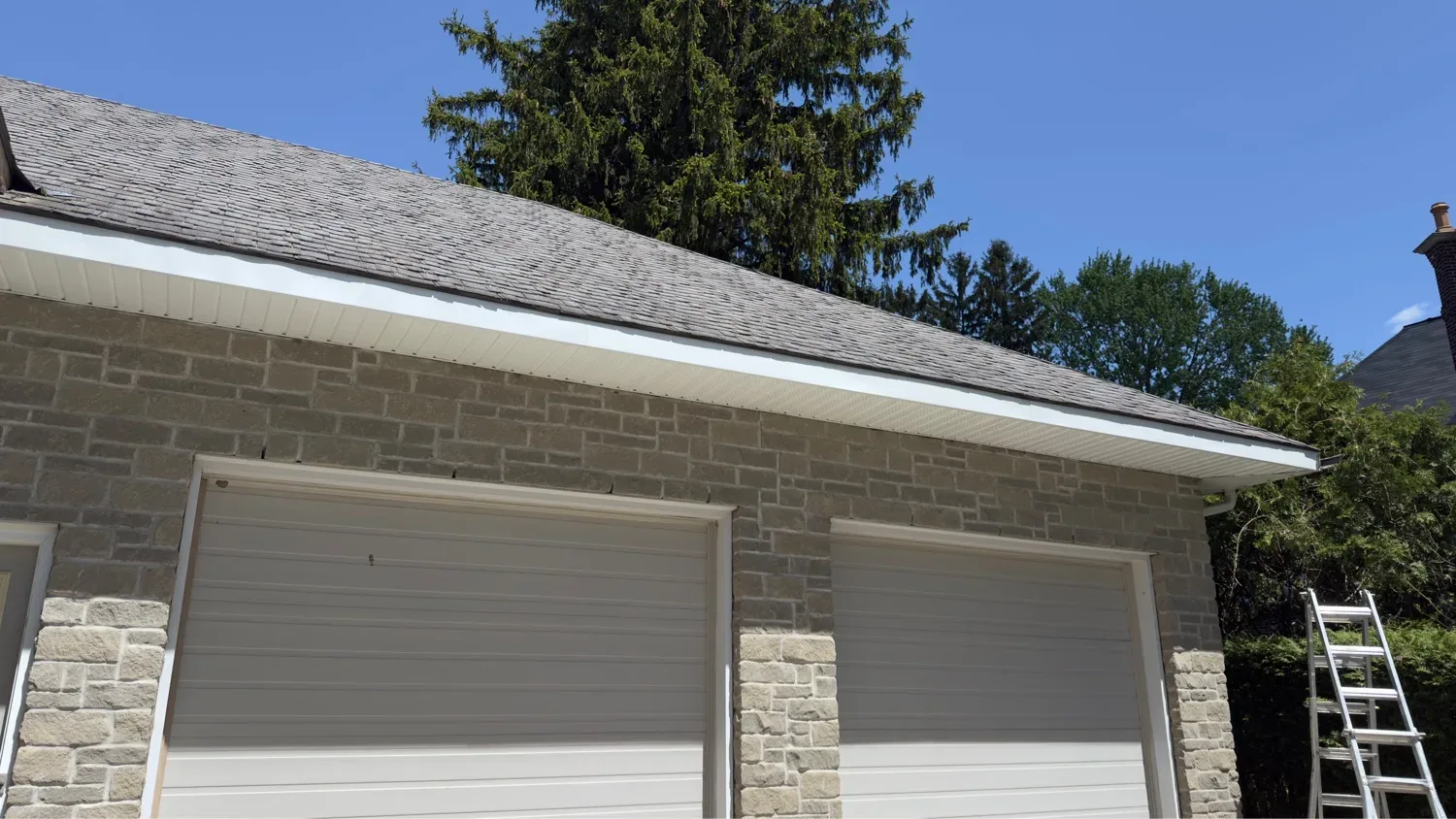
Separate surface wear from failed backing
Fascia runs along the roof edge and often provides backing for eavestrough attachment. Weathered paint alone does not establish that the board has failed. Soft, crumbling or split wood found during a close inspection is a different matter, especially at fasteners or joints.
Have an appropriately equipped contractor test suspect areas when access is needed. Do not lean a ladder against a loose gutter to investigate it. A localized damaged section may be repairable without replacing every roofline component.
Follow the water before choosing the repair
Repeated paint failure or staining below a gutter can point to overflow, a leaking joint or a roof-edge detail allowing water behind the board. Find the source of recurring moisture rather than inferring it from paint alone.
Open board joints or loose capping also need assessment, but a joint is not automatically evidence of structural decay. Record where the defect is, when it leaks and whether the same place has been repaired before. Photos taken during rain from sheltered ground level can help distinguish overflow from leakage behind the gutter.
Decide what needs prompt attention
A gutter pulling away, hanging fascia or falling pieces need prompt attention and a clear area below. Ask whether the attachment failure is in the fascia, a fastener or the supporting framing. Pest entry also warrants a coordinated response before gaps are closed.
Aluminum capping is appropriate only over suitable backing. Capping over deteriorated wood is not a sound repair. The scope should state the damaged length, supporting repairs and how the cause of wetting will be addressed.
Technical references for this guide
- Gentek aluminum soffit, fascia and rainware installation guide — Gutter attachments need suitable supporting material; fascia covering is a separate component.
- Natural Resources Canada: Keeping the Heat In — roofs and attics — Assess roof framing, fascia and soffit for moisture problems.
Sources & References
- Ontario Building Code — Relevant Standards & Guidelines

Include a preferred date and time
Discuss your exterior project
Select the exterior work and note the current material and repair or replacement needs.
Prefer to send the details first? Request a quote or call (519) 501-5003.