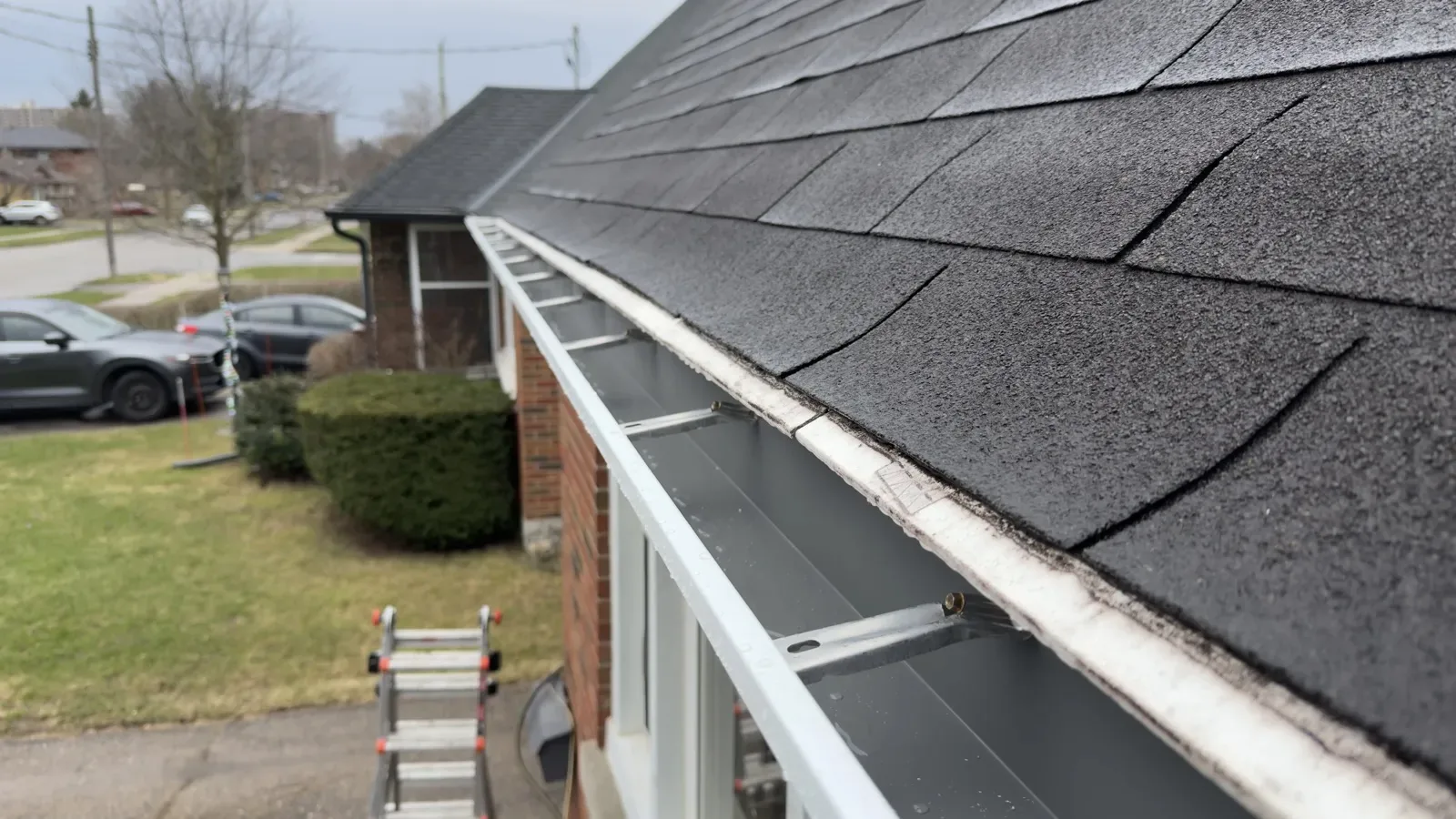
Use seasonal inspections as checkpoints
Keep spring and autumn checks in the plan, then note the debris found at each visit. Record the affected run, nearby trees, amount of material and whether the outlet was obstructed. If a gutter is already overflowing before a planned visit, shorten the interval.
Different trees can shed leaves, seeds or needles at different times. A newly overhanging branch or a storm can change the pattern. Do not assume one fixed spring month accounts for all the debris your property receives.
Separate accumulation from drainage defects
A roof valley may concentrate both water and debris at one corner. Compare that location with a clear run rather than treating the whole property as equally affected. Roof pitch alone does not reliably predict how often every outlet needs clearing.
If overflow continues after clearing, ask for slope, outlet restrictions and supporting defects to be checked. More frequent cleaning cannot repair a failed seam or a gutter that has pulled away. Keep cleaning observations and repair recommendations as separate entries.
Reassess after guards, repairs or roof work
Guards change where debris collects and how maintenance is performed. Read the specific product instructions, including how to reach outlets. A micro-mesh surface may need cleaning even when the trough beneath contains little debris.
After roof replacement, repairs or a major storm, check for construction debris or newly displaced components. Agree on safe access and what the cleaning service includes. Over a season, use the record to choose the next interval and budget for identified repairs rather than repeated emergency clearings.
Technical references
- Government of Canada: Eavestroughs and downspouts — Spring/fall and event-driven checks.
- Gutterglove: Pollen and micro-mesh maintenance — Micro-mesh can require cleaning when pollen obstructs it.

Include a preferred date and time
Discuss your exterior project
Select the exterior work and note the current material and repair or replacement needs.
Prefer to send the details first? Request a quote or call (519) 501-5003.