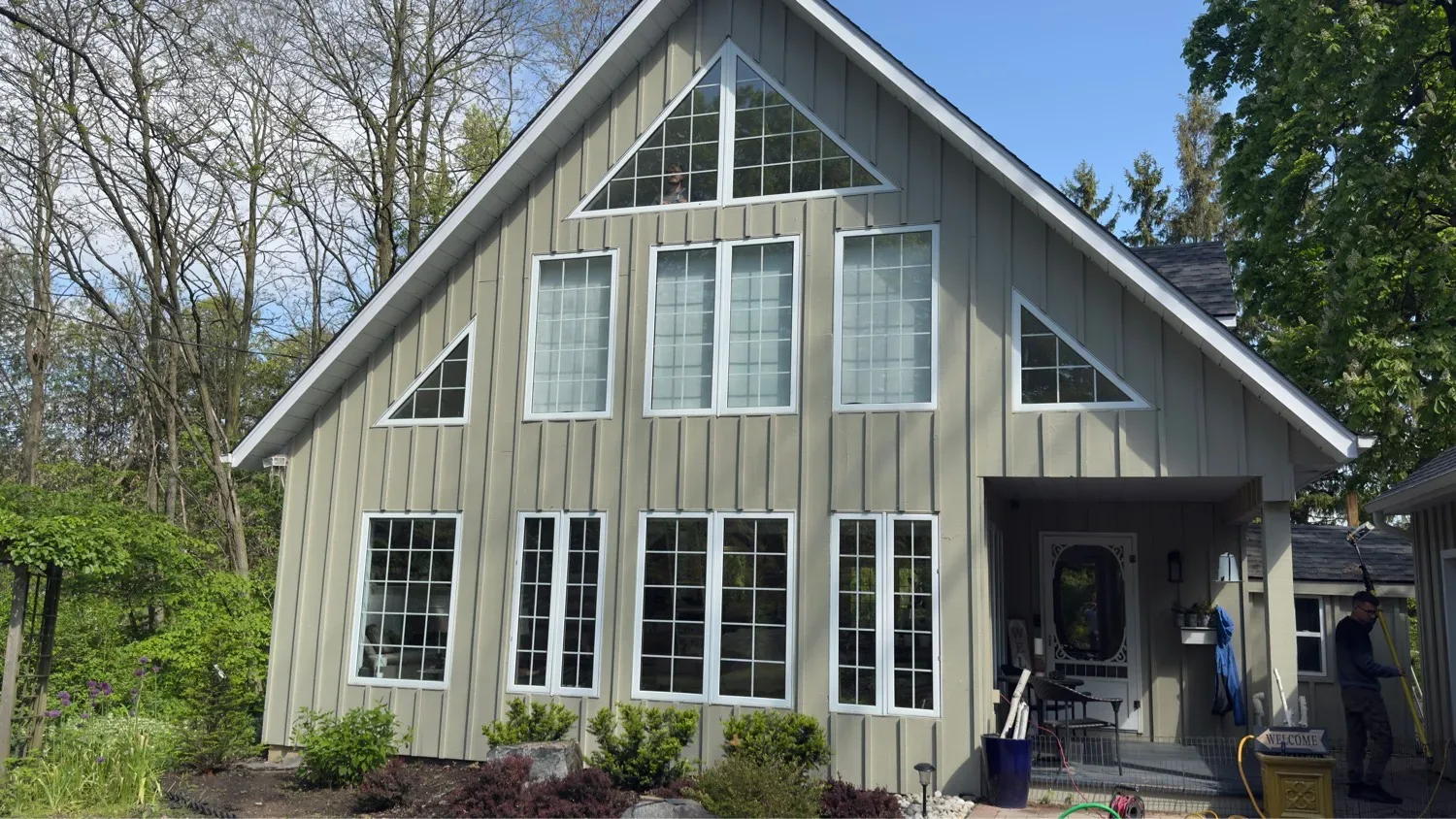
Inspect and identify before washing
Confirm the cladding and finish, including previously painted areas. Look for loose panels, deteriorated joints, exposed wood and water stains around openings. A visibly open or damaged joint should be assessed before washing sends more water toward it.
Check the manufacturer’s cleaning guidance. James Hardie, for example, recommends a low-pressure hose and nonmetal brush for its siding instead of high-pressure washing. Painted wood, historic masonry and damaged coatings need their own assessment. Older paint may contain lead, so do not use washing as an uncontrolled way to strip it.
Choose the method for the complete situation
Pressure, nozzle, distance, flow, angle and dwell time all affect the force at the surface. There is no universal PSI table that makes every vinyl, brick or stucco wall safe to wash. If equipment is permitted, use the maker’s method and test a small inconspicuous area first.
Protect windows, electrical fixtures, vents and vulnerable finishes. Keep water from being driven into laps, open joints or the wall cavity. Plan safe access for the equipment rather than leaning from a ladder with a pressurized wand. Stop if the finish marks, fibres lift, panels shift or water appears inside.
Rinse, inspect and allow drying before coating
Use compatible cleaning products and their specified dilution and rinsing procedure. Do not improvise mixtures. Prevent cleaner from drying on surfaces where the instructions prohibit it, and protect adjacent materials and planting as directed.
After cleaning, inspect for remaining contamination or damage instead of assuming a wet wall is ready for paint. Let the substrate reach the coating’s required moisture condition. Washing that exposes a defect does not prove where an earlier leak began; diagnose the detail before sealing or covering it.
Technical references
- James Hardie: Cleaning siding — Manufacturer recommends low-pressure hose and brush rather than high-pressure washing.
- Gentek: Vinyl siding cleaning guide — Gentek soft-brush cleaning and rinsing methods.
- Health Canada: Lead-based paint — Older coatings require assessment before disturbance.
- Benjamin Moore: Exterior painting preparation — Clean surfaces must meet coating condition requirements before painting.

Include a preferred date and time
Discuss your exterior project
Select the exterior work and note the current material and repair or replacement needs.
Prefer to send the details first? Request a quote or call (519) 501-5003.