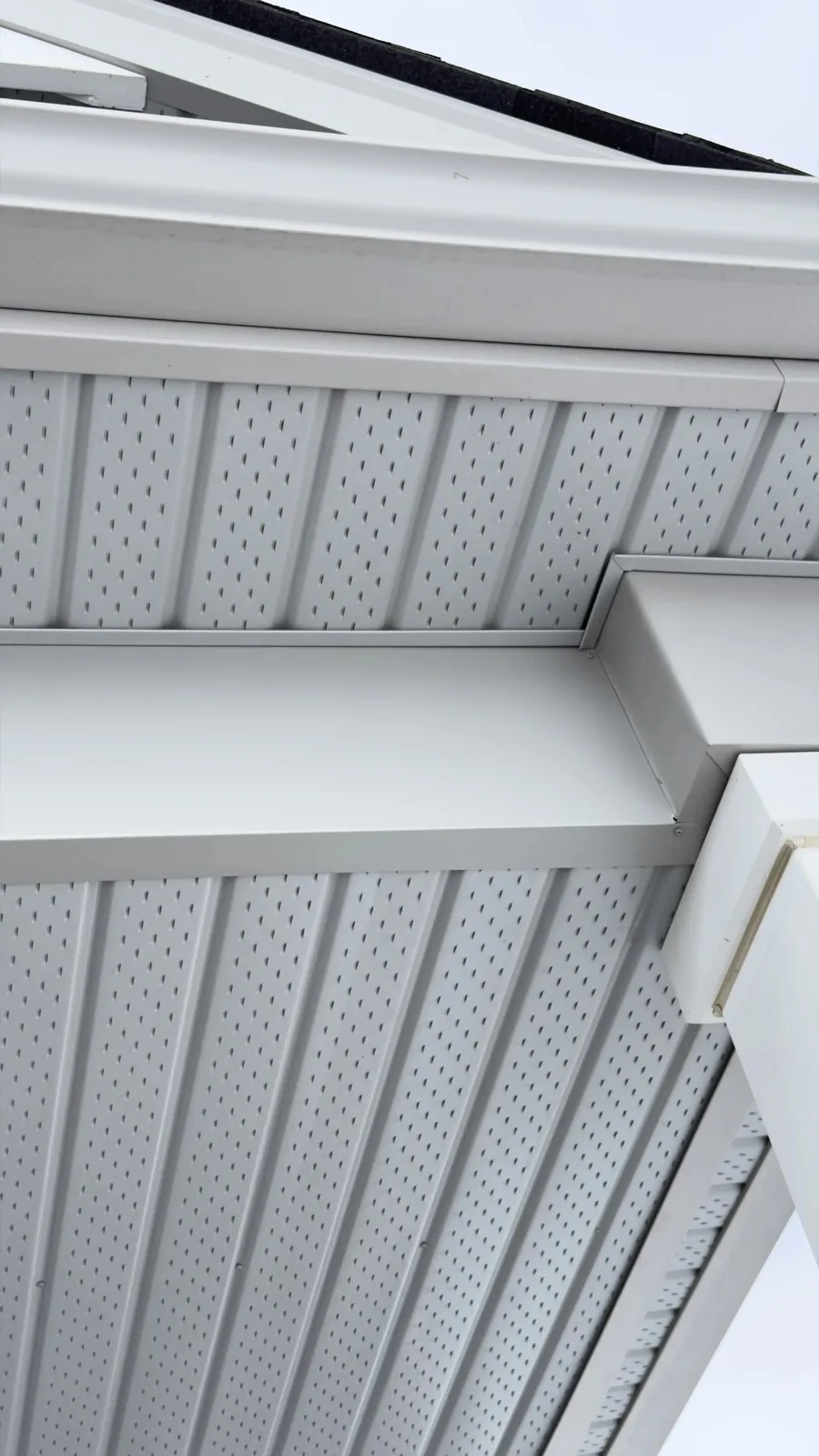
Soffit is about airflow, not just looks, so here is how to hire a KW contractor who understands attic ventilation and will not cause hidden moisture problems.
Soffit in Waterloo Region: What Makes Our Climate Different
Soffit does more than close in your roof overhang, it feeds fresh air into your attic, and in Waterloo Region that airflow is what keeps your roof healthy through 80 to 120 freeze-thaw cycles each winter. Sitting on the Waterloo Moraine near 335 metres, our homes swing between thaw and deep freeze constantly, and a poorly vented attic traps warm moist air that condenses, rots sheathing and feeds ice dams. In 2026, expect roughly $8 to $15 per linear foot for aluminum soffit installed; a full soffit-and-fascia package on an average detached home typically runs $3,000 to $6,500 depending on overhang depth and access.
Overhang widths and venting needs vary street to street. The deep eaves on mid-century homes in Forest Heights and Stanley Park need wide, well-vented panels, while tight modern soffits in Doon and Beechwood demand careful vent selection to hit the right airflow. Century homes in Galt, Preston, Hespeler and Old University Guelph often hide layers of painted wood soffit that must come off before new aluminum goes up. D&D Exterior Finishing has installed and ventilated soffit across Kitchener, Waterloo, Cambridge and Guelph, and we size the venting to the attic, not just the look, because a beautiful panel that starves the attic of air causes exactly the moisture damage homeowners are trying to prevent.
Here is the note most homeowners miss: soffit is half of a balanced ventilation system. Building practice targets roughly 1 square foot of net free vent area per 300 square feet of attic floor when intake and exhaust are balanced, and soffit provides the crucial intake. If a contractor installs solid, non-vented panels or lets insulation block the airflow with no baffles, you get condensation, mould and ice dams even under a brand-new roof. Soffit can be installed year-round, but pairing it with an attic ventilation check in fall, before ice-dam season, is the smart move.
Credentials and Ventilation Know-How to Verify
The safety and business credentials come first. Confirm your soffit contractor holds a current WSIB clearance certificate, at least $2 million general liability insurance, and a registered Ontario business number, and ask to see the documents rather than just hear about them. Soffit work is done off ladders and scaffolding at the roofline, so working-at-heights training under O. Reg 297/13 is non-negotiable; it protects the crew and shields you from liability. Because soffit ties directly into the fascia and eavestrough, also make sure the company routinely does all three together rather than treating soffit as an afterthought. A contractor who only does siding on the side may install pretty panels but miss the ventilation and flashing details that actually protect your attic and roof edge.
What truly separates soffit specialists is ventilation knowledge. Ask them to explain the net free area they are providing and how it meets the roughly 1:300 ratio of vent area to attic floor. A pro knows that mixing vented and solid panels, or adding continuous vented soffit without clear baffles at the eaves, can leave insulation choking off the airflow. They should also balance intake at the soffit with exhaust at the ridge or roof vents, since too much of one starves the system. Just as important, a competent installer inspects for existing trouble before covering anything: dark staining, soft plywood or nesting behind the old soffit signals a moisture or pest problem that must be fixed first. Covering rot with shiny aluminum only hides a bill that grows over winter.
Questions That Reveal a Real Soffit Pro
Lead with ventilation. Ask 'How will you make sure my attic gets enough intake air?' A knowledgeable contractor talks about net free area, vented-panel spacing and baffles, not just colour. Follow with 'Are you installing fully vented, solid, or a mix, and why?' The answer should tie to your attic size and existing roof vents, not a one-size default. Ask 'Will you check the attic and existing soffit for moisture or pest damage before you cover it?' where the right answer is always yes. Also ask 'How do you handle the transition to the fascia and eavestrough?' since gaps there let in birds, wasps and wind-driven snow. Vague answers about airflow are the clearest sign a crew is treating a ventilation job as a cosmetic one.
Then confirm the practical details. Ask 'Aluminum or vinyl soffit, and which do you recommend for my home?' where a straight installer will note that aluminum is more rigid, resists sagging and will not yellow or crack in our sun and cold the way budget vinyl can, though vinyl costs less. Ask 'Are you removing the old soffit entirely or cladding over it?' because cladding over rotten wood traps moisture and defeats the purpose. Confirm 'Is the crew your own employees, and are they covered by the WSIB and insurance you showed me?' Finally, request a written scope that specifies vented versus solid footage, material and gauge, and how ventilation targets will be met. A contractor who commits ventilation details to paper is one who actually plans to deliver them.
What Drives Soffit Cost and What Cheap Quotes Skip
Soffit is priced by the linear foot, but the real cost drivers are overhang depth, material and ventilation ratio. Wide eaves need wider panels and more material, and deep two-storey access in a Doon or Beechwood home adds labour and staging. Aluminum costs more than vinyl but lasts longer and stays rigid across freeze-thaw swings, so a quote should state which you are getting and the gauge. Most important, the quote should specify the mix of vented and solid panels and the resulting airflow, because the cheapest way to shave a soffit price is to install solid panels everywhere, which looks identical from the ground but strangles your attic. In 2026, expect roughly $8 to $15 per linear foot installed in Waterloo Region.
When a soffit quote comes in unusually low, the savings almost always hide in the airflow and the prep. Cheap jobs install solid panels to avoid buying vented stock, skip baffles, or clad straight over old rotten wood soffit without removal and inspection. Others use thin vinyl that sags in summer heat and cracks in a January cold snap, or leave gaps at the fascia line that invite wasps and squirrels. Because none of these shortcuts show from the driveway, homeowners often do not notice until attic condensation, mould or ice dams appear a winter later, a repair that can cost more than the original job. A fair mid-range quote that spells out venting, removal and material is worth more than a rock-bottom number that stays silent on all three.
Reviews, References and Warranties for Soffit Work
Because soffit problems are invisible until they are not, reviews and references matter even more than usual. Scan reviews for mentions of attic moisture, ice dams, or callbacks about airflow, since those tell you whether a contractor understood ventilation or just hung panels. Ask for local references from soffit-and-fascia jobs that have been through at least one full winter, ideally in your part of KW, so you can ask those homeowners whether their attic stayed dry and their gutters stayed ice-free. A contractor confident in their ventilation work will gladly point to completed homes in Forest Heights, Stanley Park or Hespeler. Be wary of a company that only shows glossy install-day photos and cannot speak to how those attics performed once the snow came.
Insist on a written workmanship warranty, and make sure it covers more than the panels. The aluminum or vinyl carries a manufacturer finish warranty, but you want the contractor's own promise to fix sagging panels, failed vent transitions or gaps they created, typically two to five years in our market. Because soffit is tied to ventilation, ask specifically whether the warranty addresses airflow-related callbacks, not just cosmetic defects. Confirm it is transferable if you sell. When the job is done, inspect it: look up under the eaves for consistent vented panels where planned, check for tight transitions at the fascia, and if you can, glance into the attic for daylight airflow at the eaves. D&D Exterior Finishing carries full WSIB clearance and $2M liability and backs its soffit and ventilation work in writing.
Frequently Asked Questions
- Do I really need vented soffit, or can I use solid panels?
- Unless another system already supplies your attic's intake air, you need vented soffit. Vented panels let fresh air flow up into the attic to balance the exhaust at the ridge, which prevents condensation and ice dams. Solid panels look the same from the ground but can starve the attic and cause moisture damage over a KW winter.
- What ventilation ratio should my soffit provide?
- The common target is roughly 1 square foot of net free vent area for every 300 square feet of attic floor, split between intake at the soffit and exhaust at the roof. A good contractor calculates this for your specific attic and confirms nothing inside, like insulation without baffles, is blocking the airflow.
- Is D&D Exterior Finishing insured and WSIB-covered?
- Yes. D&D Exterior Finishing carries full WSIB clearance and $2M liability insurance, and we share both certificates before starting. You are fully protected against liability for on-site injuries or property damage during your soffit installation.
Key Takeaways
- Soffit is a ventilation system, not just trim, so hire a contractor who talks net free area and baffles.
- Confirm WSIB, $2M liability and working-at-heights training before any ladder goes up.
- Make quotes state the vented-vs-solid panel mix and material; cheap bids hide solid panels and skipped prep.
- Get a two-to-five-year written workmanship warranty and references from jobs a winter or more old.
- D&D Exterior Finishing serves Kitchener, Waterloo, Cambridge, Guelph and surrounding areas
- Get a free no-obligation quote — call or book online anytime
Sources & References
- Ontario Building Code — Relevant Standards & Guidelines
- D&D Exterior Finishing field experience across Waterloo Region
Book your free quote online
Pick a date and time below — takes about 60 seconds, and we’ll confirm by email.