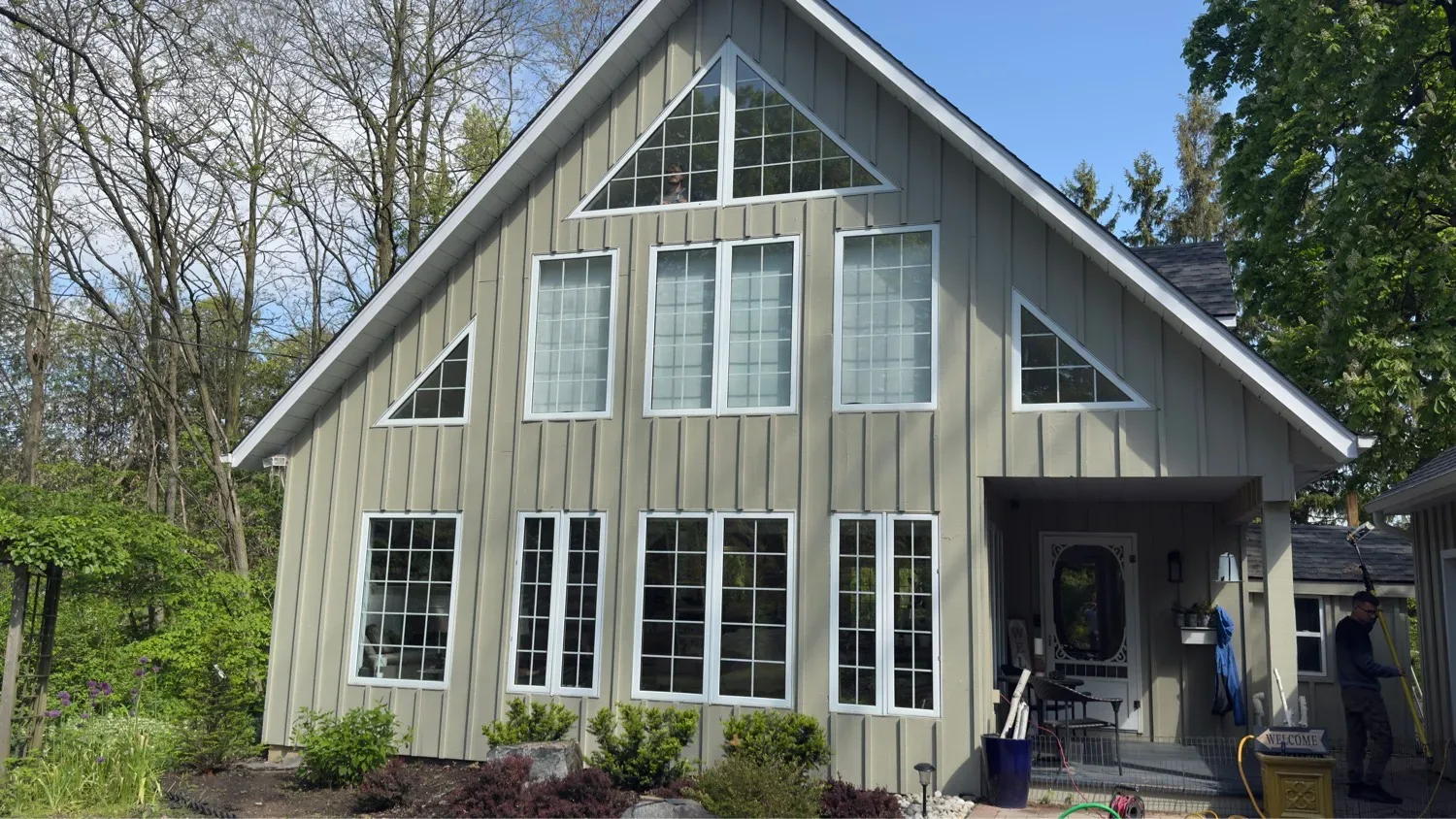
Inspect and start with a gentle clean
Look for loose or cracked panels, failed joints and staining that may reflect a leak or runoff from another material. Address vulnerable openings before washing. Test the proposed cleaner on a small inconspicuous area and check the finish after it dries.
A soft cloth, sponge or soft-bristle brush with an approved mild cleaning solution is a useful starting method. Work in manageable areas using the manufacturer’s washing and rinsing sequence. Rinse residue thoroughly and avoid allowing cleaner to dry on the surface.
Treat persistent surface growth and stains carefully
If ordinary washing does not remove the mark, use a siding-compatible product labelled for that type of stain or growth. Follow its dilution, contact-time, protection and rinsing instructions. Protect nearby planting and finishes as directed.
Do not add detergent or another cleaning product to bleach. Health Canada warns against mixing household bleach with other cleaners because toxic gases can result. A homemade mixture is not necessary to describe effective siding care. Chalking or finish deterioration may also need an assessment rather than repeated stronger cleaning.
Avoid damage and investigate recurring marks
Do not use abrasive pads, metal brushes or unapproved solvents. Pressure-washer suitability depends on the actual product and condition; no generic 800–1,200 PSI range guarantees safety. Avoid forcing water into joints, behind panels or around openings.
After the siding dries, compare the test area with the surrounding finish. Repeated staining beneath a gutter or near a damp corner deserves investigation of runoff, shade and adjacent conditions. Cleaning can improve appearance, but it does not restore a cracked panel or repair a water-management defect. Keep a note of the successful product and method for future care.
Technical references
- Gentek: Vinyl siding cleaning guide — Gentek material-specific soft cleaning and rinsing.
- Health Canada: Do not mix bleach with cleaning products — Health Canada prohibits mixing bleach with other cleaning products.
- James Hardie: Cleaning siding — Illustrates why cleaning methods differ by cladding; not a vinyl pressure specification.

Include a preferred date and time
Discuss your exterior project
Select the exterior work and note the current material and repair or replacement needs.
Prefer to send the details first? Request a quote or call (519) 501-5003.