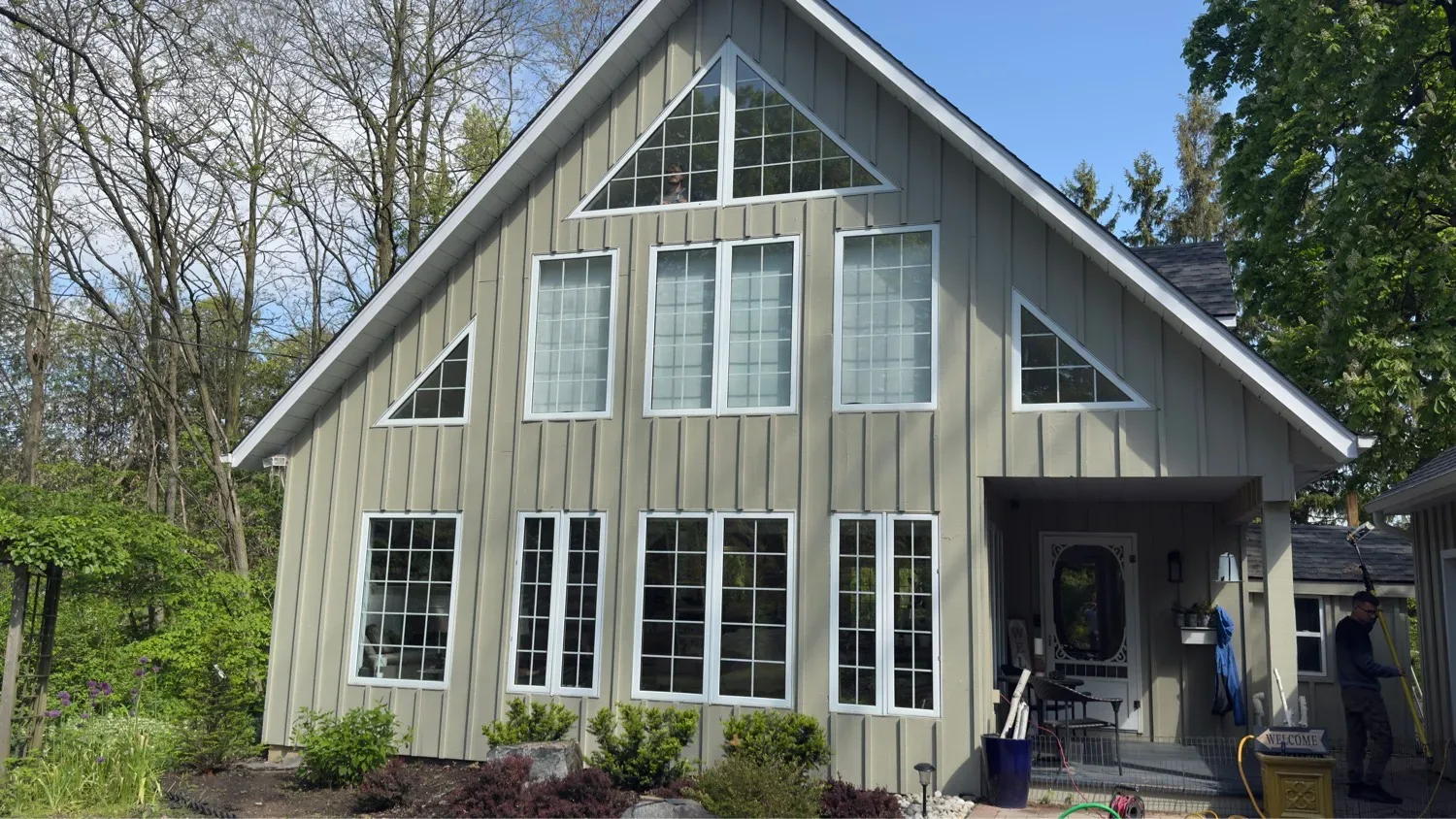
Record the pattern and dry the affected surfaces
For several days, note the room, outdoor conditions, indoor humidity and whether moisture follows showers, cooking or overnight cooling. Wipe water off sills and finishes so repeated wetting does not become a second problem. Photographs are useful if the haze disappears before a service visit.
Check whether water can be wiped from the inside. If the outside surface is safely visible, distinguish exterior dew from haze between panes. Water tracking down from above the frame or arriving with rain deserves a leak investigation, even when other windows also have condensation.
Reduce indoor moisture and improve circulation
Use kitchen and bathroom extraction that vents outdoors, and check that the equipment actually moves air. Review humidifier settings, indoor clothes drying and other concentrated moisture sources. If a ventilation system is installed, follow its operating and maintenance instructions; persistent problems may need a ventilation assessment.
Allow room air to reach the glass by opening blinds or curtains when practical and keeping heat outlets unobstructed. There is no single humidity setting that prevents condensation on every window in all weather: colder glass requires a lower indoor dew point. Use your observations to assess improvement rather than relying on a promised universal percentage.
Know when maintenance will not solve it
Damaged weatherstripping or a poorly sealed frame can leave a local cold area; have the cause checked before adding random layers of sealant. Keep intentional drainage paths open. A persistently wet or deteriorating frame needs more than wiping and lower humidity.
Outdoor dew occurs when glass is below the outdoor dew point, not above it. Between-pane moisture in an IGU requires an assessment of glass or sash replacement. Request evidence for any defogging performance claim, and choose full-frame work when the surrounding assembly also needs it.
Technical references
- NRCan: Upgrading windows and exterior doors — Moisture reduction, air circulation and window repair considerations.
- Andersen: Exterior glass condensation — Correct outdoor dew-point explanation.
- Andersen: Window condensation explained — Identify sealed-unit moisture separately from surface condensation.

Include a preferred date and time
Discuss your exterior project
Select the exterior work and note the current material and repair or replacement needs.
Prefer to send the details first? Request a quote or call (519) 501-5003.