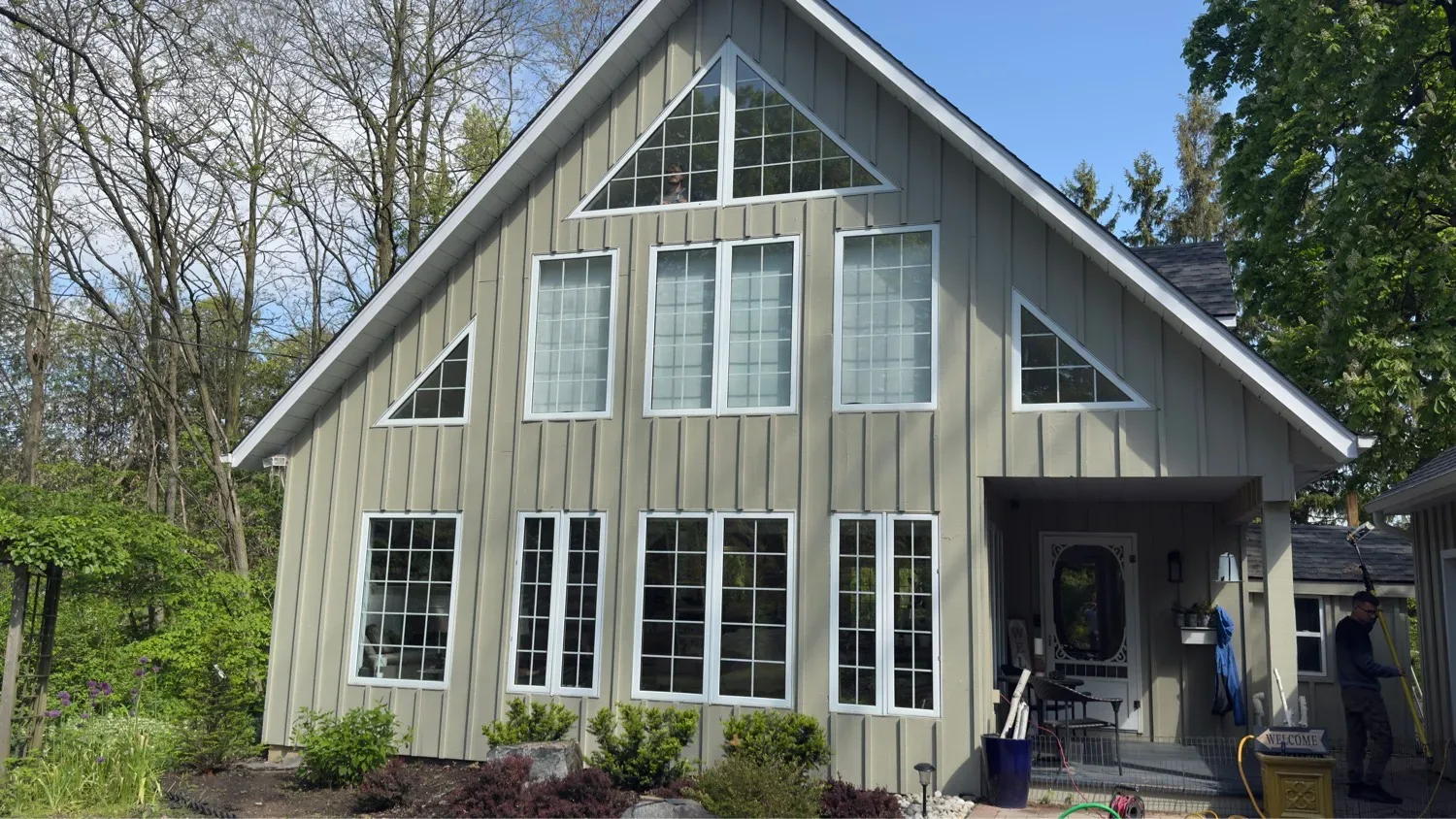
Understand what each number measures
- U-factor: heat transfer through the rated assembly; lower values mean less heat transfer under the test conditions.
- Energy Rating (ER): a Canadian rating combining heat loss, solar gain and air leakage; a higher ER is better within that rating method.
- Solar heat gain coefficient (SHGC): the fraction of solar heat admitted; a higher number admits more solar heat.
- Visible transmittance (VT): the fraction of visible light transmitted; a higher number generally means more daylight through the glazing.
U-factor may be reported in W/m²·K or Btu/h·ft²·°F. Do not compare a number in one system directly with a number in the other. Ask both bidders to use the same units and confirm whether the value covers the whole window.
Connect the ratings to the room
A lower U-factor can help reduce heat transfer, but SHGC is not simply a lowest-number contest. Orientation, shade, glass area and summertime overheating matter. A bright room with extensive west-facing glazing may need a different balance from a small, shaded opening.
Ask for the quoted configuration’s rating, including glass options and grilles. Consider daylight and view alongside the heating and cooling tradeoffs. A condensation-resistance result, when available, is a comparative test result; it does not guarantee dry glass at every indoor humidity or outdoor temperature.
Verify certification and installation scope
Use the current ENERGY STAR Canada specification and product listing. Older references to an Ontario ENERGY STAR “Zone 2” should not be used to determine current eligibility. ENERGY STAR certification also does not replace the applicable building-code or project approval requirements.
Record the manufacturer, model, operation, glazing package, rating units and certification identifier on the quote. Installation must separately address the connection to the wall, air sealing and water management. Product ratings do not predict a specific reduction in your household bill.
Technical references
- NRCan: Window and door ratings and certification — Definitions, whole-unit comparison and U-factor unit systems.
- NRCan: ENERGY STAR Canada window and door specification — Current Canadian certification framework replaces the legacy climate-zone advice.

Include a preferred date and time
Discuss your exterior project
Select the exterior work and note the current material and repair or replacement needs.
Prefer to send the details first? Request a quote or call (519) 501-5003.