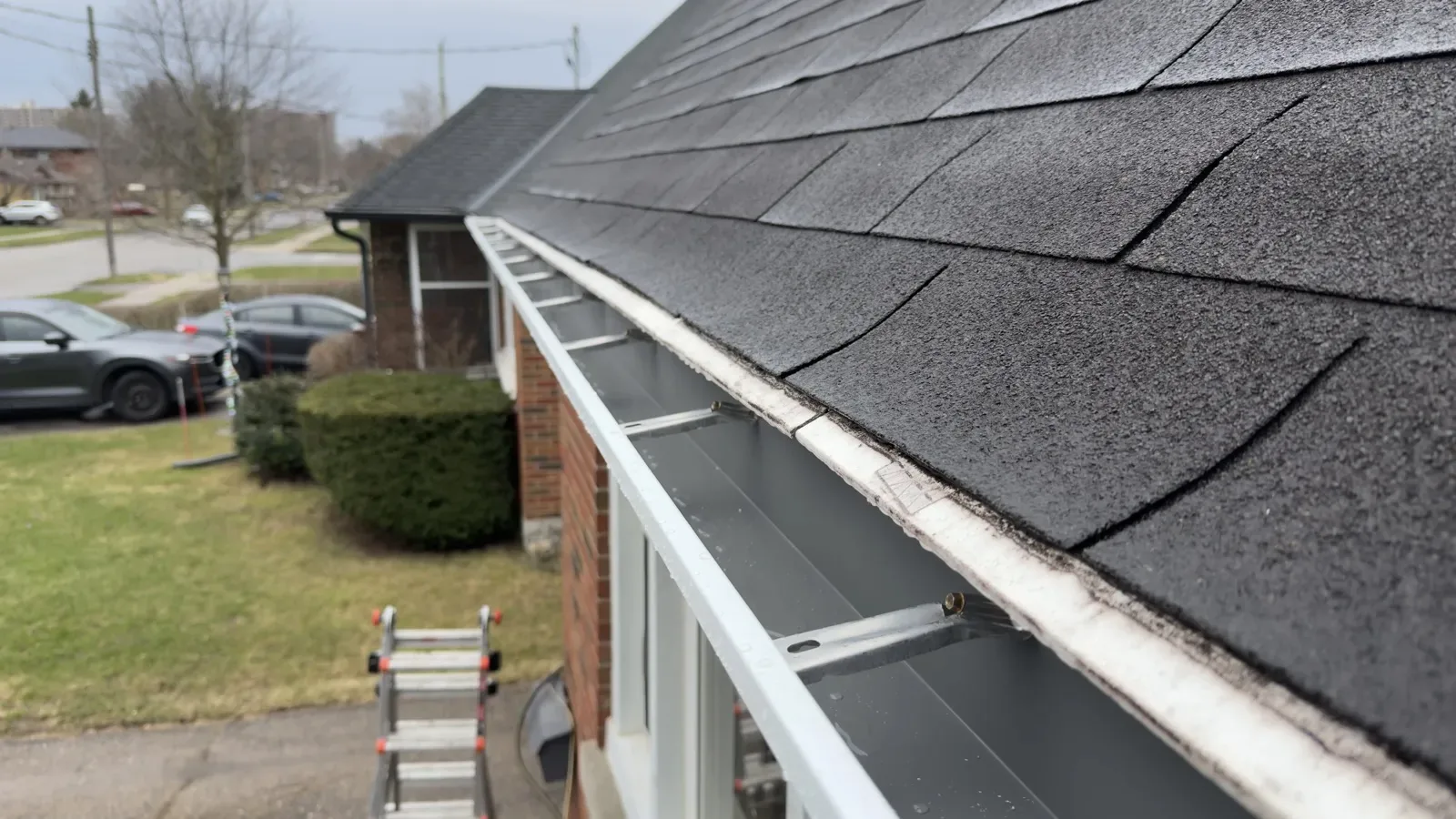
Distinguish size from drainage performance
Five-inch and six-inch are nominal sizes. The precise cross-section depends on the profile and manufacturer, so a K-style and half-round gutter of the same nominal width should not be assigned the same capacity without product data.
A volume held per foot is not the same measure as a drainage flow rate. Outlet size, run length, slope and rainfall design affect how quickly water can leave. Ask for the basis used to size the whole system rather than applying a universal percentage increase.
Check whether the existing size is adequate
A working five-inch system does not need replacement just because a larger option is available. Review performance during rain and check that the runs and outlets are clear and properly supported.
If water spills at one point, investigate a local obstruction, low spot or roof-flow concentration. A downspout or outlet correction may be more relevant than changing every run. Record the observed defect before comparing upgrade options.
Identify reasons to assess a larger system
Large contributing roof areas, long travel to an outlet and valleys concentrating flow can warrant a capacity review. Steep roofs may also direct runoff past the gutter edge, which makes placement and roof-edge geometry part of the assessment.
A larger gutter is not a guaranteed cure for overshooting or a blocked underground connection. Ask whether additional outlets, larger downspouts or revised discharge are needed with it. Do not classify every commercial building or metal roof by one automatic gutter size.
Compare specifications and quote differences
| Ask for | Why it matters |
|---|---|
| Exact profile and material | Nominal width alone does not define the section |
| Roof area served by each outlet | Shows where runoff is concentrated |
| Outlet and downspout sizes | Reveals restrictions after water enters the trough |
| Support and roof-edge detail | Confirms attachment and capture of runoff |
| Complete installed totals | Compares the actual proposed systems, including repairs |
Choose by run rather than house label
Different elevations can receive different amounts of water. If mixed sizes are proposed, ask how each run was evaluated and how the profiles meet at transitions. Check appearance with the existing fascia as well as the drainage purpose.
Have the quotation identify the assumptions and the problem the change is expected to address. Keep the drawings or measurements with the installation record so a future overflow can be investigated against the intended layout.
Common sizing questions
- Does a bigger gutter remove the need for cleaning?
- No. Debris can still obstruct the gutter, outlet or downspout.
- Can a standard roof-area rule choose the downspout?
- Use the selected system’s design method and actual roof conditions, not one fixed area for every building.
- What is the upgrade price?
- Compare current written options for your property, including any changes to outlets and downspouts.
Technical references
- Gentek aluminum soffit, fascia and rainware installation guide — Product-specific gutter and outlet layout.
- Government of Canada: Eavestroughs and downspouts — Consider larger gutters/downspouts when overflow persists despite maintenance.

Include a preferred date and time
Discuss your exterior project
Select the exterior work and note the current material and repair or replacement needs.
Prefer to send the details first? Request a quote or call (519) 501-5003.