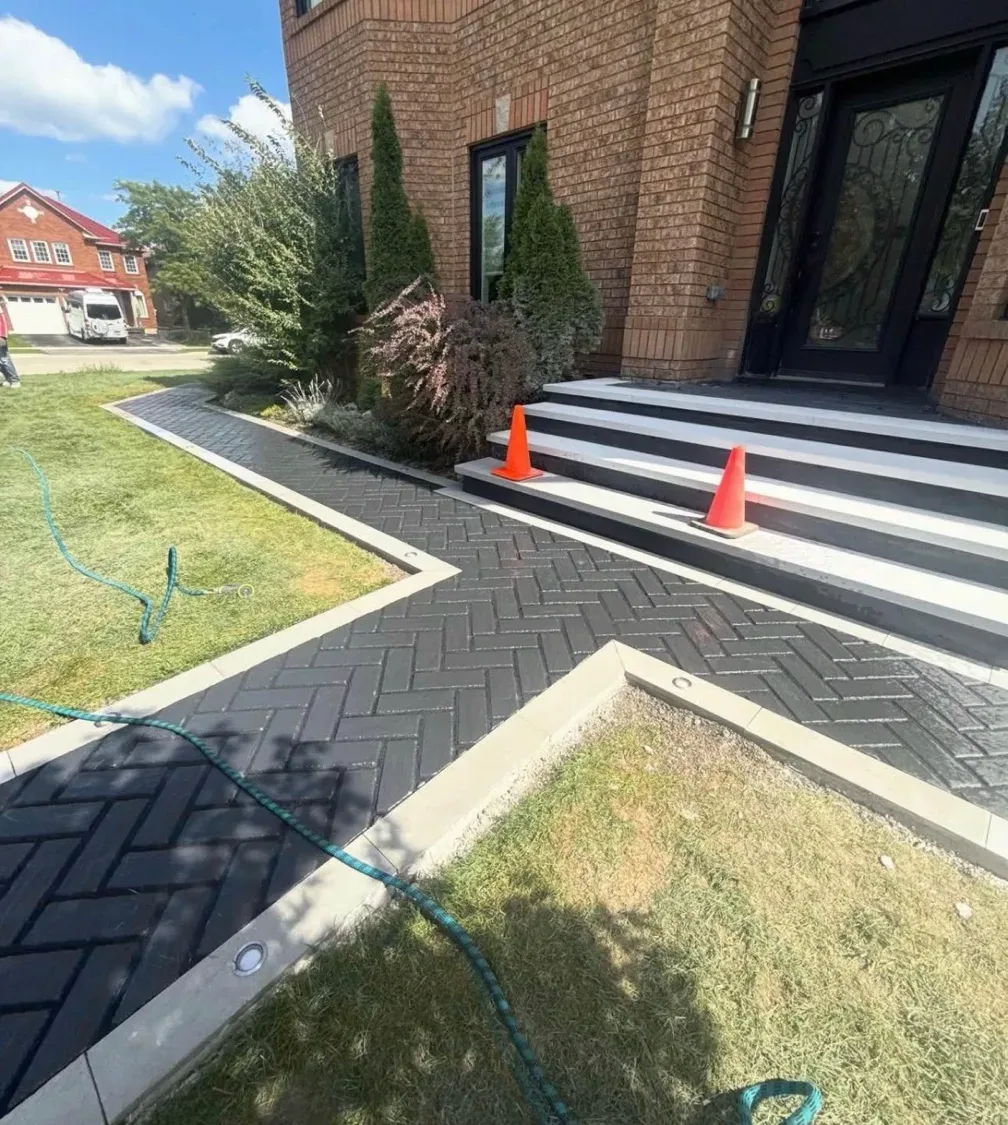





Interlock & Paving in Ayr, Ontario
Interlocking stone uses individual paving units for driveways, patios, walkways and steps. Base preparation, the laying pattern, edge restraints and joint material are separate parts of the installation.
Interlock Installation and Repair Scope to Discuss
Define the Paved Area
A driveway, walkway and patio carry different loads and have different access needs. We establish the footprint, elevations and connections to steps, doors and existing paving.
Record Movement and Surface Concerns
Settlement, heaving and pooling can come from the base or drainage rather than the pavers. The assessment determines whether lifting and resetting a section is reasonable or deeper rebuilding is needed.
Compare the Complete Paving Specification
The base, bedding, paver, edge restraint and jointing material work together. The quote should specify the complete system and the surface finish instead of treating all pavers as equivalent.
Clarify Site Arrangements
Excavation access, underground services, material delivery and soil removal affect the sequence. Protecting nearby planting and maintaining access to the building are part of planning the work.
Work Items to Specify in the Scope
The agreed area is excavated and prepared for its intended use and ground conditions. The base is placed and compacted in suitable stages with the planned drainage falls.
The specified bedding layer is prepared to support an even finished surface. Its material and thickness follow the selected paving system.
Pavers are laid in the agreed pattern and cut at edges and obstacles. Levels are checked where the new paving meets doors, steps and adjacent surfaces.
Edge restraints and compatible jointing material are installed as specified. The finished surface is checked and the product’s curing or reopening instructions are explained.
Questions to Resolve Before Agreeing the Work
How thick does the base need to be for interlock in Ontario?
There is no single base depth suitable for every Ontario property. Vehicle loads, soil, drainage, frost movement and the selected paving system determine the design. The quote should describe the proposed excavation and base rather than rely on a universal depth.
How long does interlock last?
Service life depends on the pavers, base construction, drainage, traffic and maintenance. Local settlement or joint loss can sometimes be repaired by lifting and resetting the affected area. No fixed lifespan can be promised from the surface material alone.
Can interlock be installed over existing concrete?
Sometimes an overlay system is possible, but the existing concrete must be assessed for condition, drainage and finished heights. Cracked or moving concrete can transfer problems to the new surface. Removal and a new base may be the more suitable scope.
What is polymeric sand and why is it used?
Polymeric sand is a jointing material that binds after the manufacturer’s activation process. It helps stabilize compatible paver joints, but it cannot correct an unstable base. Joint dimensions, weather and installation instructions determine whether it suits the project.
Do I need a permit for an interlock driveway?
Check municipal requirements before changing driveway dimensions, access, grading or drainage. A like-for-like repair differs from a new or widened driveway. Required permissions and responsibility for obtaining them should be settled before excavation.
What affects the quote: Area, excavation depth, soil removal, access, paver selection, drainage corrections and edge details affect price. Lifting and resetting existing pavers should be compared separately from a complete rebuild.