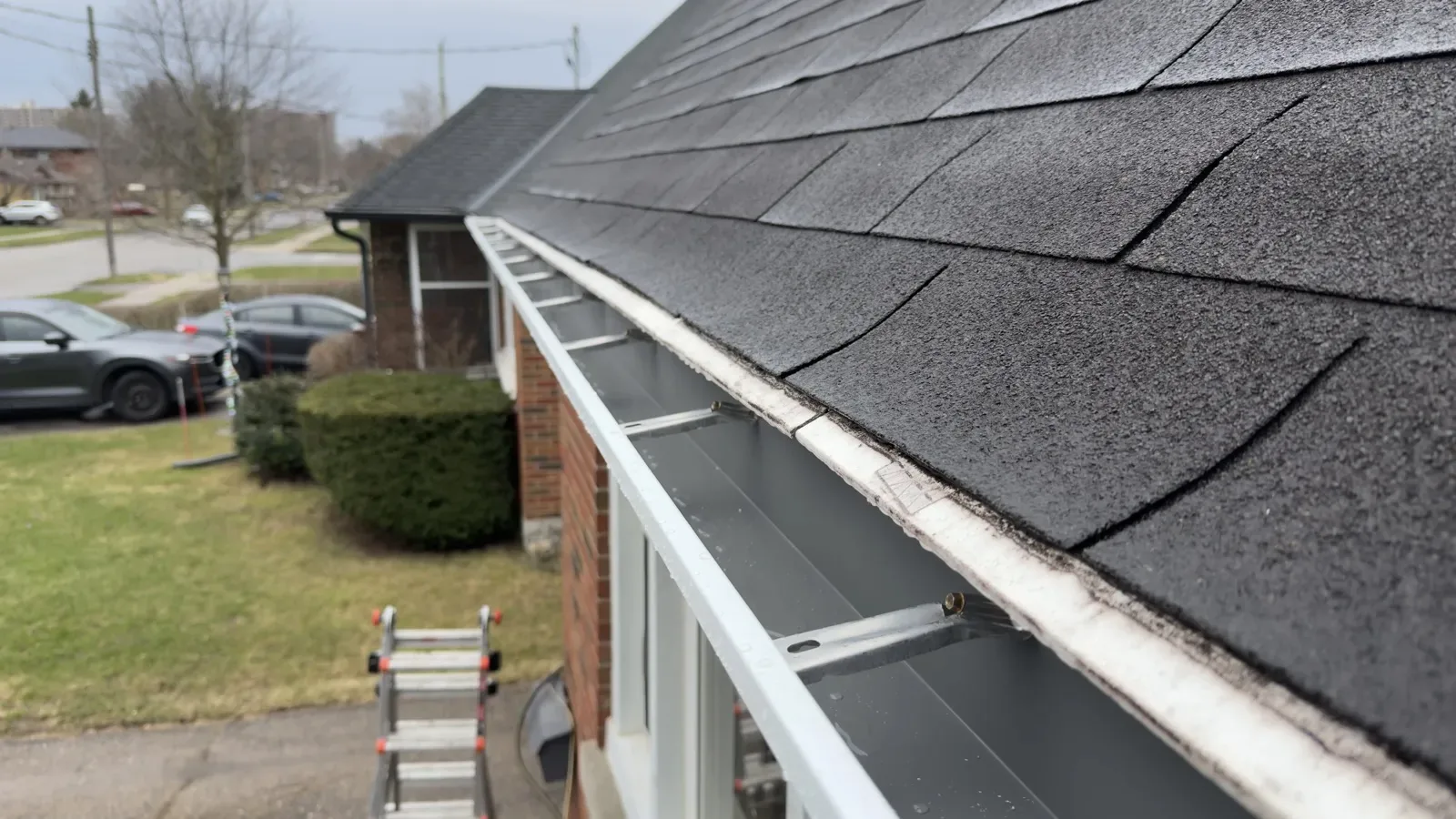
Spring: check what winter left behind
When conditions permit safe observation, inspect for displaced runs, loose downspouts and damage near joints. Check that extensions are connected and their ends are not buried in remaining snow or debris.
Arrange clearing of winter debris and monitor spring seed accumulation. Note whether meltwater or rain returns toward the foundation. A blocked discharge route can remain a problem even when the gutter itself looks empty.
Summer: watch concentrated runoff
After a strong storm, look for overflow below valleys, leaking corners and new debris. From shelter, record whether water rises over the edge or shoots over it from the roof; these observations can lead to different repairs.
Check planted areas and rain-barrel overflow routes. Changes to landscaping should not block the intended discharge or redirect water onto a neighbour’s property. Persistent overflow in a clear system needs assessment of slope, outlets and capacity.
Autumn: match cleaning to leaf fall
Inspect during the leaf-drop period rather than waiting through repeated overflow for every tree to finish. A heavily treed property may need an interim clearing and a later check.
Include guard surfaces, outlets and elbows. If a maintenance provider comes while leaves are still falling, record what was cleared and whether a return check is needed. Do not treat a gutter guard as proof that autumn care is unnecessary.
Winter: keep discharge and access safe
Observe from the ground for hanging material, ice near entrances and blocked downspout ends. Keep people clear of falling-ice or loose-component hazards and arrange appropriate help. Do not chip at an elevated gutter or climb an icy roof edge.
Follow the rain-barrel manufacturer’s winter instructions and maintain an alternate runoff route. Repeated ice dams warrant assessment of roof and attic heat loss as well as drainage; gutter cleaning alone is not a complete remedy.
Keep a short maintenance log
Record date, weather, affected run, debris removed and any repair recommended. Photographs from the same position make recurring sagging or staining easier to compare.
Schedule work around the observed condition and safe access. If a contractor recommends replacement, ask which recurring defect cannot be corrected by cleaning, joint repair, support repair or an outlet change.
Technical references
- Government of Canada: Eavestroughs and downspouts — Seasonal and storm-related checks and rain-barrel winter care.
- City of Waterloo: Property standards and drainage — Preserve safe drainage patterns.
- Natural Resources Canada: Keeping the Heat In — roofs and attics — Repeated ice problems may involve attic heat leakage.
Need Eavestrough in Kitchener-Waterloo?
Get a free, no-obligation estimate from D&D Exterior Finishing. Describe the work needed at your Waterloo Region property.
Get Eavestrough Quote (519) 501-5003